I received an unexpected blessing a few weeks ago. It took the form of an email stating "the campus ministers have decided there will be no 9 pm mass on December 19". I conduct and worship with a collegiate musical ensemble every Sunday at an hour that to me seems impossibly late. I've written before about how they inspire me, and the assembly with whom we worship has become an important part of my spiritual life.
Still, for someone who works early Monday mornings, a standing Sunday night gig can be a drag. I was not-so-secretly happy to squeeze one more week out of winter break. Ever busy, I had two other church gigs in my neighborhood this weekend. After last night's 6 pm mass I dashed home, got changed, and drove to the apartment of two newlywed friends who are also hosting another couple at whose wedding I sang and who now live in Germany.
We briefly did the basic "catching up" small talk and then conversation plowed right into education: Jesuit schools, charter schools, diocesan schools, rigor, standards, you name it. As the part moved from the living room to the dinner table we talked about the homilies we'd heard at our parishes that weekend, about how parishes (and their liturgies) feed people (or don't). The Dream Act, Vatican II, the SSPX, a train station in Stuttgart - nothing was outside our purview. We agreed and disagreed, challenged, supported and edified each other. And I thought "here is my other church".
I hold the sacramental life of the Church in a place of highest honor. It is the Church's public prayer made up of particular actions that give us grace. But I can only be as positive as I am about the communal prayer of the Church - its liturgy - because I have experience of church that is intimate, local, and relational.
People often roll their eyes at my devotion, because "the Church" does this or that that they - and maybe even I - don't like. In my heart the Church is not just a series of pronouncements or dogma or the College of Cardinals. My Church has always been my people: my family, my parish, my school, my work, my diocese.
If you don't 'get' community, I don't see how you could 'get' Church, or liturgy. Two nights ago with another group of friends - not from my Catholic circles and not monolithically religious - a dear friend looked around at everyone hollering and laughing in one couples' basement and whispered to me "this is magical". Magical it was. A group of people who a few years prior were strangers are now like family. This is my other church.
I come across people who want to get the Church out of the modern world. Let us go back into the fortress, drape the nuns in black habits, cover the women's heads and put back the altar rail to guard the table from the faithful. Let's bring the Church back to a different era (one we have arbitrarily chosen as 'the most Catholic' - give us the 19th century with indoor plumbing). While we're at it, let's make sure we know who's in and who's out . There are "real" - pure, elect - members of the Body of Christ, and then there's everyone else.
The people on that side of the culture war shout the loudest because they know they have lost. The world has turned and they are still in the past. I don't want an anachronistic Church, frozen in time. I like my Church in the here and now, around all the tables of my life. I recognize the current of grace in which I swim because of real people and relationships. No old-fashioned fantasy can compete with the living, breathing sanctity of my community drawn together by the Spirit of love.
Showing posts with label liturgy. Show all posts
Showing posts with label liturgy. Show all posts
Monday, December 20, 2010


Saturday, September 18, 2010
Baruch atah Adonai
I spent the better part of the last 24 hours singing Yom Kippur services as a “ringer”in a temple choir. I also sang for Rosh Hashanah this year, and while I’d never suggest that this experience gives me any license to make claims about the Jewish liturgical life, I found (as I often do) that praying with a less-familiar religious group helped me to clarify my thoughts about worship.
I felt more at home at the High Holidays services than I have at many at services of Christian denominations. My guess is that this comfort has to do with two elements that were present in these Reform Jewish rites: focus on God and focus on community.
One would think that focus on God could go without saying when describing a worship service, but this is not always the case. This weekend there was no doubt on whom the focus lay. The assembly declared the attributes of God, the promises of God, God’s working in the world throughout history. Over and over we sang Baruch atah Adonai, blessing the One who has no need of blessing but who believe treasures our blessings. These blessings are seemingly frivolous, unneeded, but they are to us essential. Our souls exhaust themselves attempting to describe that which cannot be described and to praise that alone which can be praised.
While looking out to God the prayers of the liturgy also focused on the community, on the “us”. In my view, the best liturgy reminds those worshipping that we are an “us”, a group gathered in time and place, connected across time and place with those who also worship. Our “us” is not just a gathering of individuals but the intangible ties between people that create true communities.
If we focus on God and on “us“, there is little room left to focus on “me”. As indulgent as navel-gazing can be, if we truly seek salvation we cannot be looking inward. It is through others that virtue is expressed, that we respond to God’s call to live in grace. Worship is not a place for our personal devotion, even less a place to examine ourselves. I spend enough time focusing on myself.
These thoughts are incomplete, but since I’ve committed myself to academic study of liturgy it would be a bit anti-climactic to exhaust all my reflections on it in one blog post. I have no plans to change cult anytime soon, but things felt right today as joined another community in their worship. I find freedom in blessing the name of the Lord, setting aside any other concerns, remembering the appropriate object of my attention and expressing the praise I was created to express.
(NB: I really struggled with whether to use G_d or God when writing this post, or whether to use other titles in each reference I made to the Creator. Something feels icky about using Judaism as a springboard for my reflections and then tromping all over one of their customs, but I decided using G_d would just be too precious.)
I felt more at home at the High Holidays services than I have at many at services of Christian denominations. My guess is that this comfort has to do with two elements that were present in these Reform Jewish rites: focus on God and focus on community.
One would think that focus on God could go without saying when describing a worship service, but this is not always the case. This weekend there was no doubt on whom the focus lay. The assembly declared the attributes of God, the promises of God, God’s working in the world throughout history. Over and over we sang Baruch atah Adonai, blessing the One who has no need of blessing but who believe treasures our blessings. These blessings are seemingly frivolous, unneeded, but they are to us essential. Our souls exhaust themselves attempting to describe that which cannot be described and to praise that alone which can be praised.
While looking out to God the prayers of the liturgy also focused on the community, on the “us”. In my view, the best liturgy reminds those worshipping that we are an “us”, a group gathered in time and place, connected across time and place with those who also worship. Our “us” is not just a gathering of individuals but the intangible ties between people that create true communities.
If we focus on God and on “us“, there is little room left to focus on “me”. As indulgent as navel-gazing can be, if we truly seek salvation we cannot be looking inward. It is through others that virtue is expressed, that we respond to God’s call to live in grace. Worship is not a place for our personal devotion, even less a place to examine ourselves. I spend enough time focusing on myself.
These thoughts are incomplete, but since I’ve committed myself to academic study of liturgy it would be a bit anti-climactic to exhaust all my reflections on it in one blog post. I have no plans to change cult anytime soon, but things felt right today as joined another community in their worship. I find freedom in blessing the name of the Lord, setting aside any other concerns, remembering the appropriate object of my attention and expressing the praise I was created to express.
(NB: I really struggled with whether to use G_d or God when writing this post, or whether to use other titles in each reference I made to the Creator. Something feels icky about using Judaism as a springboard for my reflections and then tromping all over one of their customs, but I decided using G_d would just be too precious.)
Sunday, September 5, 2010
Set Me as a Seal on Your Heart
During my summer of crazy tri-training I had a little phone trouble. There were a few days when I wasn’t getting notifications of messages, so when trying to organize my standing swim-breakfast date with Brendan and Nicole they left message after message and I thought they were blowing me off.
It seemed reasonable that they would want a morning off from me stomping up the vine-covered back stairs at 7:30 to eat their English muffins, so I went straight from the pool to class and didn’t think too much about it. Around noon-time I checked my email and saw about 15 different messages from them. Where are you? Are you ok? What did you do this morning? We went to the pool and looked for you.
For some reason I take great comfort in the image of Brendan, dressed for work, standing at the front desk of the pool in the humidity and heat, asking our favorite lifeguard to check the bottom of the pool.
Those two were married yesterday, in a liturgy that was sacramental in every sense of the word. Over pasta and breadsticks about six weeks ago we put together a ritual that included four languages, three blessings, two pieces by Handel, and a procession to beat the band.
The Gospel reading was the Beatitudes, and as I listened to those words read while my beautiful friends stood side by side, and our other friends and their families surrounded them in joy, my breath was taken away by how perfect everything was. They already live the Beatitudes, they already live the Good News. They are peacemakers who hunger and thirst for justice. They are pure of heart and merciful. The truth that was confirmed in the light of that Gospel passage isn’t displayed in piety or lofty speech, but in the work those two do for other people, the love they show their friends, and that they went out of their way to look for me at the bottom of the pool.
Yes, there is a special grace involved in their sacramental marriage. Still, even before the vows, the air in the church was simply crackling with grace. By doing good work their whole lives they have surrounded themselves with other generous and loving people, and the power of the community’s love was nearly tangible.
Because I’m so practical (and cynical) I know it seems a little incongruous that I am often talking or writing of love. If love were only the romantic, indulgent kind displayed on all of the wedding cards that I browsed the other day, then I doubt I could be bothered for very long. But because of God and the people in my life I know fierce, diligent love. I know productive, gritty love. I know relentless, inescapable, sustaining, thrilling love. I have learned Father Zosima’s lesson that “active love is a harsh and fearful thing compared to love in dreams”, and led by the example of the people in my life I have tried to plunge into that love.
Nicole and Brendan let me tag along on their adventures in goodness, and I am so grateful. This morning I congratulated them once more and sat on the Common with a few of our other friends from our volunteer year. The sun was shining and the breeze was cool: a perfect September morning. We talked about work and family and told dumb jokes, and then I went off to noon mass. Sitting in the pew (a rare occurrence) I had trouble focusing, thinking about the previous day. In my distractedness clarity hit me like a ton of bricks: my whole life is a sacrament. The outward signs of grace are not objects - not my apartment or car or job. Relationships manifest grace, and I have better ones than I deserve.
Set me as a seal on your heart,
as a seal on your arm;
For stern as death is love,
relentless as the nether world is devotion;
its flames are a blazing fire.
Deep waters cannot quench love,
nor floods sweep it away.
Song of Songs 8: 6-7a
It seemed reasonable that they would want a morning off from me stomping up the vine-covered back stairs at 7:30 to eat their English muffins, so I went straight from the pool to class and didn’t think too much about it. Around noon-time I checked my email and saw about 15 different messages from them. Where are you? Are you ok? What did you do this morning? We went to the pool and looked for you.
For some reason I take great comfort in the image of Brendan, dressed for work, standing at the front desk of the pool in the humidity and heat, asking our favorite lifeguard to check the bottom of the pool.
Those two were married yesterday, in a liturgy that was sacramental in every sense of the word. Over pasta and breadsticks about six weeks ago we put together a ritual that included four languages, three blessings, two pieces by Handel, and a procession to beat the band.
The Gospel reading was the Beatitudes, and as I listened to those words read while my beautiful friends stood side by side, and our other friends and their families surrounded them in joy, my breath was taken away by how perfect everything was. They already live the Beatitudes, they already live the Good News. They are peacemakers who hunger and thirst for justice. They are pure of heart and merciful. The truth that was confirmed in the light of that Gospel passage isn’t displayed in piety or lofty speech, but in the work those two do for other people, the love they show their friends, and that they went out of their way to look for me at the bottom of the pool.
Yes, there is a special grace involved in their sacramental marriage. Still, even before the vows, the air in the church was simply crackling with grace. By doing good work their whole lives they have surrounded themselves with other generous and loving people, and the power of the community’s love was nearly tangible.
Because I’m so practical (and cynical) I know it seems a little incongruous that I am often talking or writing of love. If love were only the romantic, indulgent kind displayed on all of the wedding cards that I browsed the other day, then I doubt I could be bothered for very long. But because of God and the people in my life I know fierce, diligent love. I know productive, gritty love. I know relentless, inescapable, sustaining, thrilling love. I have learned Father Zosima’s lesson that “active love is a harsh and fearful thing compared to love in dreams”, and led by the example of the people in my life I have tried to plunge into that love.
Nicole and Brendan let me tag along on their adventures in goodness, and I am so grateful. This morning I congratulated them once more and sat on the Common with a few of our other friends from our volunteer year. The sun was shining and the breeze was cool: a perfect September morning. We talked about work and family and told dumb jokes, and then I went off to noon mass. Sitting in the pew (a rare occurrence) I had trouble focusing, thinking about the previous day. In my distractedness clarity hit me like a ton of bricks: my whole life is a sacrament. The outward signs of grace are not objects - not my apartment or car or job. Relationships manifest grace, and I have better ones than I deserve.
Set me as a seal on your heart,
as a seal on your arm;
For stern as death is love,
relentless as the nether world is devotion;
its flames are a blazing fire.
Deep waters cannot quench love,
nor floods sweep it away.
Song of Songs 8: 6-7a
Friday, July 30, 2010
If you're not outraged...
Once upon a time, like a lot of idealistic young people, I lived and died by the bumper-sticker creed “If you’re not outraged you’re not paying attention”. After a little time and a lot of experience, my bumper sticker is more likely to read “if you’re not outraged, you’ve probably developed a good self-preservation mechanism”. It’s not to say that there isn’t still plenty in this world worthy of lament, but that most of it is not the result of nefarious individuals but of huge systems impervious to our outrage. As I discovered the first time I was crossed by Bank of America, sometimes there is no one responsible, and no one to be mad at, and the anger only hurts ourselves.
Even with individuals I find it hard to maintain anger. Like a goldfish fooled each time by the tapping on the glass, I can easily be won over by a pleasant exchange with someone, even if previous exchanges have been less than pleasant, and even if I am convinced that they are one of those rare nefarious individuals mentioned above. Perhaps it’s because I am so frequently in need of mercy and forgiveness myself, but I am usually pretty willing to start over again with someone even if they’ve irked me in the past.
A lot of people mention Jesus’ anger when they are trying to justify their own. That’s a nice idea, but come on, this is Jesus we’re talking about. Yes, he went recognizably bonkers over the money changers in the temple, but he was also the Son of God. I better be sure my motivations are as pure and my anger as righteous when I start flipping tables.
Is it called growing up? Is it called settling? Is it called getting over it, whatever it may be? I’m not sure. But because I am more willing to let things go now, I give even more attention to the handful of things I am not willing to let go. There are a few incidents in my history that I refuse to forgive or forget, the claws and barbs of which I refuse to release from my gut and my psyche. I have made a conscious decision to keep being angry about these, so they must matter.
One was being told in elementary school that I couldn’t be an altar server because I was a girl, and the other was being told in high school that I should quit singing because my voice wasn’t worth listening to. They involve such wildly different things, but to me they are so similar that I have almost conflated the two incidents into some epic thwarting, an unidentifiable outside voice telling me something about me that I knew was false.
The comment in high school was really crushing. Not only had I shaped a fair amount of my identity around my vocal talent, I also had the intuition to know that this was what I should be doing. Singing was who I was, and had been since long before I had any outside feedback that my voice was “good” or “pretty” or “sweet” or any of the other adjectives that get thrown around. Singing was something I had always done, and part of how I expressed myself. Whether my voice was pretty or sweet had nothing to do with the most important fact which was that my voice was mine.
The issue with altar serving raises whole issues of gender that I’m not sure I am ready to get into here. What I am willing to get into, and what should embarrass me more than it does, is that even as a child I had a strong and bizarre devotion to the liturgy and I knew I wanted to be a part of it. The same way that I will now read any book, attend any lecture, or take any class that has to do with liturgy, when I was a child I would take any opportunity to be involved. It was bad luck that I was in a parish (and perhaps a diocese? I’m not sure) that still prohibited “altar girls”, and I remember being so astounded that I couldn’t even be angry or upset.
One of my earliest memories is of someone at day care telling me that blue was “a boys’ color” and having my now-typical reaction of “that’s the most ridiculous thing I have ever heard”. I never believed there was anything ontologically different about me because of my gender. There was nothing I deserved or didn’t deserve, nothing I was capable or incapable of, simply because I was a girl. So to be told that this element of my identity that I truly believed to be inconsequential was going to affect another person’s decision about what I could do was an absurdity that passeth all understanding.
In retrospect, neither of these things was truly enraging, more dumbfounding: somebody thought they knew better than me about me, and that somebody was wrong. Everyone has things that they are wired for, and to have those natural inclinations denied or disparaged truly violates the natural order of things. I suppose I hang on to these insults and slights because I don’t want to forget what it is that makes me who I am. I don’t want to forget that no one can tell me what I am capable of or what my aspirations should be. It’s good to let things go, but equally good to know what we should hold onto, what's worth being mad about.
I have avoided putting a “gender” tag up on the blog for a while, because I don’t want to get into something so controversial. But maybe it’s time.
Even with individuals I find it hard to maintain anger. Like a goldfish fooled each time by the tapping on the glass, I can easily be won over by a pleasant exchange with someone, even if previous exchanges have been less than pleasant, and even if I am convinced that they are one of those rare nefarious individuals mentioned above. Perhaps it’s because I am so frequently in need of mercy and forgiveness myself, but I am usually pretty willing to start over again with someone even if they’ve irked me in the past.
A lot of people mention Jesus’ anger when they are trying to justify their own. That’s a nice idea, but come on, this is Jesus we’re talking about. Yes, he went recognizably bonkers over the money changers in the temple, but he was also the Son of God. I better be sure my motivations are as pure and my anger as righteous when I start flipping tables.
Is it called growing up? Is it called settling? Is it called getting over it, whatever it may be? I’m not sure. But because I am more willing to let things go now, I give even more attention to the handful of things I am not willing to let go. There are a few incidents in my history that I refuse to forgive or forget, the claws and barbs of which I refuse to release from my gut and my psyche. I have made a conscious decision to keep being angry about these, so they must matter.
One was being told in elementary school that I couldn’t be an altar server because I was a girl, and the other was being told in high school that I should quit singing because my voice wasn’t worth listening to. They involve such wildly different things, but to me they are so similar that I have almost conflated the two incidents into some epic thwarting, an unidentifiable outside voice telling me something about me that I knew was false.
The comment in high school was really crushing. Not only had I shaped a fair amount of my identity around my vocal talent, I also had the intuition to know that this was what I should be doing. Singing was who I was, and had been since long before I had any outside feedback that my voice was “good” or “pretty” or “sweet” or any of the other adjectives that get thrown around. Singing was something I had always done, and part of how I expressed myself. Whether my voice was pretty or sweet had nothing to do with the most important fact which was that my voice was mine.
The issue with altar serving raises whole issues of gender that I’m not sure I am ready to get into here. What I am willing to get into, and what should embarrass me more than it does, is that even as a child I had a strong and bizarre devotion to the liturgy and I knew I wanted to be a part of it. The same way that I will now read any book, attend any lecture, or take any class that has to do with liturgy, when I was a child I would take any opportunity to be involved. It was bad luck that I was in a parish (and perhaps a diocese? I’m not sure) that still prohibited “altar girls”, and I remember being so astounded that I couldn’t even be angry or upset.
One of my earliest memories is of someone at day care telling me that blue was “a boys’ color” and having my now-typical reaction of “that’s the most ridiculous thing I have ever heard”. I never believed there was anything ontologically different about me because of my gender. There was nothing I deserved or didn’t deserve, nothing I was capable or incapable of, simply because I was a girl. So to be told that this element of my identity that I truly believed to be inconsequential was going to affect another person’s decision about what I could do was an absurdity that passeth all understanding.
In retrospect, neither of these things was truly enraging, more dumbfounding: somebody thought they knew better than me about me, and that somebody was wrong. Everyone has things that they are wired for, and to have those natural inclinations denied or disparaged truly violates the natural order of things. I suppose I hang on to these insults and slights because I don’t want to forget what it is that makes me who I am. I don’t want to forget that no one can tell me what I am capable of or what my aspirations should be. It’s good to let things go, but equally good to know what we should hold onto, what's worth being mad about.
I have avoided putting a “gender” tag up on the blog for a while, because I don’t want to get into something so controversial. But maybe it’s time.
Tuesday, July 6, 2010
I will hold Your people in my heart
Earlier today I clicked on a link to a post titled “Ten worst hymns of all time”. Despite the flippant title I expected to read something examining texts, vocalism, needs of communities, and musicality. Unfortunately I found the same list of popular tunes that I’ve read 100 times before, followed by reader comments lamenting the good ol’ days when we sand Gregorian chant and Holy God, We Praise Thy Name (which happens to be one of my favorite hymns, although people taking issue with awkward lyrics in modern songs shouldn't then turn around and raise up a tune with the line 'Lo! the apostolic train angel choirs above are raising'). I should be clear my beef here is more with the comments and the idea of picking out the “worst hymns” than it is with the actual list (although the inclusion of Pescador de Hombres offends me).
Judging by their comments most of the readers could be called “traditional” or “conservative” (yes, labels are odious, but sometimes they are necessary) , and it is no surprise that they don’t like the St Louis Jesuits, and they don’t have much use for Marty Haugen and David Haas, either. I have always argued that post-conciliar American liturgical music is a mixed bag, and that it is going to take sometime to separate the wheat from the chaff. But despite picking out a handful of bad couplets as evidence that these pieces are on shaky theological ground, it’s obvious that most of these people just don’t like that particular genre of eighth-notey, hyper-melodic, G or D major, Haugen/Haas style jams.
There are plenty of pieces in that genre for which I don’t care either. My issues with these lists (and I have read plenty, and they are almost always similar) is that rather than addressing particular shortcomings in a way that could be constructive, they self-righteously vent about how much they hate a song or how tired they are of it. It’s worth noting that One Bread, One Body has too many held notes and not enough internal rhythm, that I Am the Bread of Life has as wide a range as the National Anthem, and that We Are Called would be much better in G. Pinpointing challenges in popular hymns helps us to be more prudent about their use (We Are Called only as a closing hymn rather than opening, One Bread One Body with an organist and singers capable of subdivision, I Am the Bread of Life in thick enough orchestration that people can switch octaves and not feel like they’re sticking out). But that’s not as much fun as being snarky.
The elephant in the room when we get kvetching about Here I Am, Lord, is that people really like that song. I know, some people really like smoking, too, even though it’s bad for them. But if something is a legitimate conduit of grace, we need to give some value to that. If we don’t, it means we don’t trust our fellow worshippers’ taste or spirituality. Almost every song on this list is deeply meaningful to many people, and none are so theologically or musically revolting that they are truly unacceptable for worship. Yet there are still scads of liturgists (and armchair liturgists) who see their role as protecting the people from themselves. I literally cannot find words to express how frustrated this makes me. If you do not value or trust your community you have no place leading it.
I often joke to my choirs that they make me like songs I don’t like, and they do this by filling them with life and art and prayer. There are a very few songs that are on my “absolutely not” list, and I’ll admit that it’s often more fun to criticize a piece I don’t like than to open myself to learning why it is meaningful to other people. Just because this is what I do for a living doesn’t mean I get to decide for everyone what their values should be. I can try to influence their taste and offer new examples of meaningful music, and I can make the best of the meaningful music that is not ideal. The people who worship beside me in any setting are my family in Christ, fellow heirs of the Reign of God. To love and listen to a community can be exhausting and aggravating, but I don’t do my job as a minister or a baptized person if I smugly blow off their consensus, experience, and wisdom.
Judging by their comments most of the readers could be called “traditional” or “conservative” (yes, labels are odious, but sometimes they are necessary) , and it is no surprise that they don’t like the St Louis Jesuits, and they don’t have much use for Marty Haugen and David Haas, either. I have always argued that post-conciliar American liturgical music is a mixed bag, and that it is going to take sometime to separate the wheat from the chaff. But despite picking out a handful of bad couplets as evidence that these pieces are on shaky theological ground, it’s obvious that most of these people just don’t like that particular genre of eighth-notey, hyper-melodic, G or D major, Haugen/Haas style jams.
There are plenty of pieces in that genre for which I don’t care either. My issues with these lists (and I have read plenty, and they are almost always similar) is that rather than addressing particular shortcomings in a way that could be constructive, they self-righteously vent about how much they hate a song or how tired they are of it. It’s worth noting that One Bread, One Body has too many held notes and not enough internal rhythm, that I Am the Bread of Life has as wide a range as the National Anthem, and that We Are Called would be much better in G. Pinpointing challenges in popular hymns helps us to be more prudent about their use (We Are Called only as a closing hymn rather than opening, One Bread One Body with an organist and singers capable of subdivision, I Am the Bread of Life in thick enough orchestration that people can switch octaves and not feel like they’re sticking out). But that’s not as much fun as being snarky.
The elephant in the room when we get kvetching about Here I Am, Lord, is that people really like that song. I know, some people really like smoking, too, even though it’s bad for them. But if something is a legitimate conduit of grace, we need to give some value to that. If we don’t, it means we don’t trust our fellow worshippers’ taste or spirituality. Almost every song on this list is deeply meaningful to many people, and none are so theologically or musically revolting that they are truly unacceptable for worship. Yet there are still scads of liturgists (and armchair liturgists) who see their role as protecting the people from themselves. I literally cannot find words to express how frustrated this makes me. If you do not value or trust your community you have no place leading it.
I often joke to my choirs that they make me like songs I don’t like, and they do this by filling them with life and art and prayer. There are a very few songs that are on my “absolutely not” list, and I’ll admit that it’s often more fun to criticize a piece I don’t like than to open myself to learning why it is meaningful to other people. Just because this is what I do for a living doesn’t mean I get to decide for everyone what their values should be. I can try to influence their taste and offer new examples of meaningful music, and I can make the best of the meaningful music that is not ideal. The people who worship beside me in any setting are my family in Christ, fellow heirs of the Reign of God. To love and listen to a community can be exhausting and aggravating, but I don’t do my job as a minister or a baptized person if I smugly blow off their consensus, experience, and wisdom.
Tuesday, June 29, 2010
O Magnum Mysterium
Occasionally I am asked if I get nervous singing at church. The short answer is no, but the one ministerial task that trips me up from time to time is reading the name(s) of those for whom mass is being offered. When I have a name of unclear pronunciation I make something up and hope that the people sitting awkwardly near the gifts table don’t happen to be the entire extended family of the deceased, now even more distraught at having heard their family name butchered by the church singer.
Having mass said for someone is one of those peculiar Catholic customs that you hope doesn’t come up in mixed company. Since it usually involves a donation, on the surface it might look like a moneymaking scheme, reinforcing the misconception that Catholicism is pay-to-pray. There are as many reasons for requesting mass be said for someone as there are families and friends who have sent mass cards or gathered a memorial liturgies. There is grace in gathering together loved ones for worship, but there must be something more to it than that it makes us all feel nice to be in one place.
In the Eucharist we encounter Christ broken – could it be that that is some comfort in our own time of brokenness?
Death is such a great mystery that most of us avoid giving it much thought. It doesn't surprise me that we bring this mystery to the great mysterion, the Eucharist. I have found comfort in a faith that doesn’t avoid mystery but sanctifies it, insisting on frequent celebration of a ritual we can never understand. We celebrate that magnum mysterium, that God got down in the muck with us and suffered just like we do. When we hold someone in our heart during the sacrifice of mass we offer their memory and ourselves up to that great mystery of a Triune, loving God.
I am remembering today two loved ones who died a year ago, so what began as a prosaic reflection on mispronounced names and grandkids bringing up the gifts has turned into something more serious. How fortunate I feel to participate regularly in ritual that doesn’t depend on answers but revels in questions: How is it that our community is knit together by bread broken? Why does God continue to meet us- sinful, silly, distracted people that we are?
How could the horror of death become an instrument of our salvation?
Having mass said for someone is one of those peculiar Catholic customs that you hope doesn’t come up in mixed company. Since it usually involves a donation, on the surface it might look like a moneymaking scheme, reinforcing the misconception that Catholicism is pay-to-pray. There are as many reasons for requesting mass be said for someone as there are families and friends who have sent mass cards or gathered a memorial liturgies. There is grace in gathering together loved ones for worship, but there must be something more to it than that it makes us all feel nice to be in one place.
In the Eucharist we encounter Christ broken – could it be that that is some comfort in our own time of brokenness?
Death is such a great mystery that most of us avoid giving it much thought. It doesn't surprise me that we bring this mystery to the great mysterion, the Eucharist. I have found comfort in a faith that doesn’t avoid mystery but sanctifies it, insisting on frequent celebration of a ritual we can never understand. We celebrate that magnum mysterium, that God got down in the muck with us and suffered just like we do. When we hold someone in our heart during the sacrifice of mass we offer their memory and ourselves up to that great mystery of a Triune, loving God.
I am remembering today two loved ones who died a year ago, so what began as a prosaic reflection on mispronounced names and grandkids bringing up the gifts has turned into something more serious. How fortunate I feel to participate regularly in ritual that doesn’t depend on answers but revels in questions: How is it that our community is knit together by bread broken? Why does God continue to meet us- sinful, silly, distracted people that we are?
How could the horror of death become an instrument of our salvation?
Thursday, June 24, 2010
Getting out of the way
A few years ago I sang with a musician who I really respect and who tells it like it is. At the end of my coaching he asked me “why do you sing like you think you’re worse than you are?”
****
I just completed six days in an Institute for Arts and Worship. You would think, having spent nearly a week dealing with two of my favorite things that I would be writing prodigiously. Instead, I’ve found myself totally blocked. There are many new ideas bumping around in my head and not a lot of direction as to how to piece them all together.
One insight from the week that stuck with me was that there are many similarities between worship and art. Both require honesty, vulnerability, communication, and trust. Both are expressive and both can be a little bit radical.
There is a tendency to be fussy with our liturgical worship and prayer, dressing it up in inauthentic ways to feel as if we’ve prepared enough. I was relieved to hear John Bell, our keynote, announce that our worship should be free of gimmicks, as gimmickry is one of my biggest pet peeves in liturgical planning (and I’ve yet to find a diplomatic way to point it out when I see it). Much like in art, the nonsense we use to dress things up often ends up getting in the way of the Thing.
I, of all people, should know, master that I am of getting in the way. I have been working all month on Carmina Burana, a piece I find extremely difficult, and which, therefore, scares me to death. Practicing has been going well, but one movement was still giving me grief this week. I was singing scared, singing like I couldn’t do it, getting in my own way. Not only was I not making expressive art, I wasn’t even singing in tune. I dreaded going to the practice room, and my dread was a self-fulfilling prophecy.
So after a week of being pushed and stretched a million ways through the workshops at this Institute, I decided to let it all hang out in the practice room, to decide what I wanted to say in this movement and just let it out. No thinking about technique or perfection or control. Lo and behold, it was pretty close to perfect.
****
Why do we pray like we think we’re worse than we are? Are we afraid to let it all hang out, to cede control? Do we think that we won't be able to do it? Do we worry if we dig too deep to express ourselves most authentically that we’ll dig up something we – or God – can’t handle? We let our liturgies turn into variety shows – or morgues – rather than daring to be the Body of Christ gathered in prayer. If that gathering is not our goal, why bother?
Getting out of the way is challenging, especially when we are comfortable with our impediments. Fortunate are we that we don’t need self-conscious gimmicks or to become someone else in order to pray. All week I fought the good fight at this institute, listening to effusive enthusiasm from others about their prayer experiences in dance, improv, collage. My experiences were no doubt holy, but nothing to go home and write a poem about. I felt pressure to find my bliss in one of these less familiar prayer forms, and it was making me a little grumpy.
During our final worship together we sang one of the hymns that I know inside and out. I closed my eyes and sang my prayer with a confidence that I was offering my most honest worship. God met me there, when I was being most myself, rather than when I was trying on other guises. I trusted enough to sing and pray as I was, not believing I was worse (or better) than I am. I wasn’t in my own way, and as the singing ended I concluded just as the hymn did – lost in wonder, love, and praise.
****
I just completed six days in an Institute for Arts and Worship. You would think, having spent nearly a week dealing with two of my favorite things that I would be writing prodigiously. Instead, I’ve found myself totally blocked. There are many new ideas bumping around in my head and not a lot of direction as to how to piece them all together.
One insight from the week that stuck with me was that there are many similarities between worship and art. Both require honesty, vulnerability, communication, and trust. Both are expressive and both can be a little bit radical.
There is a tendency to be fussy with our liturgical worship and prayer, dressing it up in inauthentic ways to feel as if we’ve prepared enough. I was relieved to hear John Bell, our keynote, announce that our worship should be free of gimmicks, as gimmickry is one of my biggest pet peeves in liturgical planning (and I’ve yet to find a diplomatic way to point it out when I see it). Much like in art, the nonsense we use to dress things up often ends up getting in the way of the Thing.
I, of all people, should know, master that I am of getting in the way. I have been working all month on Carmina Burana, a piece I find extremely difficult, and which, therefore, scares me to death. Practicing has been going well, but one movement was still giving me grief this week. I was singing scared, singing like I couldn’t do it, getting in my own way. Not only was I not making expressive art, I wasn’t even singing in tune. I dreaded going to the practice room, and my dread was a self-fulfilling prophecy.
So after a week of being pushed and stretched a million ways through the workshops at this Institute, I decided to let it all hang out in the practice room, to decide what I wanted to say in this movement and just let it out. No thinking about technique or perfection or control. Lo and behold, it was pretty close to perfect.
****
Why do we pray like we think we’re worse than we are? Are we afraid to let it all hang out, to cede control? Do we think that we won't be able to do it? Do we worry if we dig too deep to express ourselves most authentically that we’ll dig up something we – or God – can’t handle? We let our liturgies turn into variety shows – or morgues – rather than daring to be the Body of Christ gathered in prayer. If that gathering is not our goal, why bother?
Getting out of the way is challenging, especially when we are comfortable with our impediments. Fortunate are we that we don’t need self-conscious gimmicks or to become someone else in order to pray. All week I fought the good fight at this institute, listening to effusive enthusiasm from others about their prayer experiences in dance, improv, collage. My experiences were no doubt holy, but nothing to go home and write a poem about. I felt pressure to find my bliss in one of these less familiar prayer forms, and it was making me a little grumpy.
During our final worship together we sang one of the hymns that I know inside and out. I closed my eyes and sang my prayer with a confidence that I was offering my most honest worship. God met me there, when I was being most myself, rather than when I was trying on other guises. I trusted enough to sing and pray as I was, not believing I was worse (or better) than I am. I wasn’t in my own way, and as the singing ended I concluded just as the hymn did – lost in wonder, love, and praise.
Monday, June 14, 2010
All you holy men and women, pray for us.
Last weekend I sang the ordination of two new priests. Having only sung one ordination prior (7 years ago), if you had asked me about the rite, the only thing I would have remembered was that it includes a litany of saints.
For a jaded old church nerd like me, it takes something special to move me (for instance, it's rare that the Agnus Dei lights my fire). Certain liturgical elements, thanks to their rarity, catch my attention (I'm a sucker for a good Sequence) and a litany is one of them. This weekend we sang Becker's popular setting of the litany. As we invoked saint after saint, while the newest members of the presbyterate lay prostrate, I became unexpectedly emotional.
The assembly repeated "pray for us" as we called upon saints familiar (Mary & Joseph), arcane (Chrysogonus & Hippolytus) and particular to our Jesuit community (Ignatius & Francis). On other occasions I have sung litanies that put Oscar Romero, Dorothy Day and Pedro Arrupe alongside Linus, Cletus and Clement. Where do we get the confidence to call upon our heroes to petition God on our behalf?
Any Catholic concerned with public perception keeps all this saints hoo-ha quiet if they can. Maybe we hedge a bit, acknowledging that we admire these people, but leaving out the more radical part of our claim to the saints: we believe there is something so generous and holy about them that they will back up our prayers.
As we asked for prayers on Saturday, what really took my breath away was the list we had in front of us, one that only skims the surface of our wealth of heavenly intercessors. And even when we mumble our response, or can't hear the cantor, or let our eyes and minds wander, the saints are still on our side, welcoming us into their communion. What greater advocates can we have than the saints named and unnamed, living in love with God forever?
[Two notes on the litany - I tried to find a recording of the Becker setting to which to link, but I was unable to find one that wasn't either out of tune, goopily sentimental, or one singer overdubbing his own responses to the invocations. Also, after the ordination I said something flippant about not knowing why a piece of music that is mildly cheesy was so moving. Luckily I was with the Jesuits, one of whom had a characteristic reply enumerating all of the evidence for this being the superior setting of the litany. Typical]
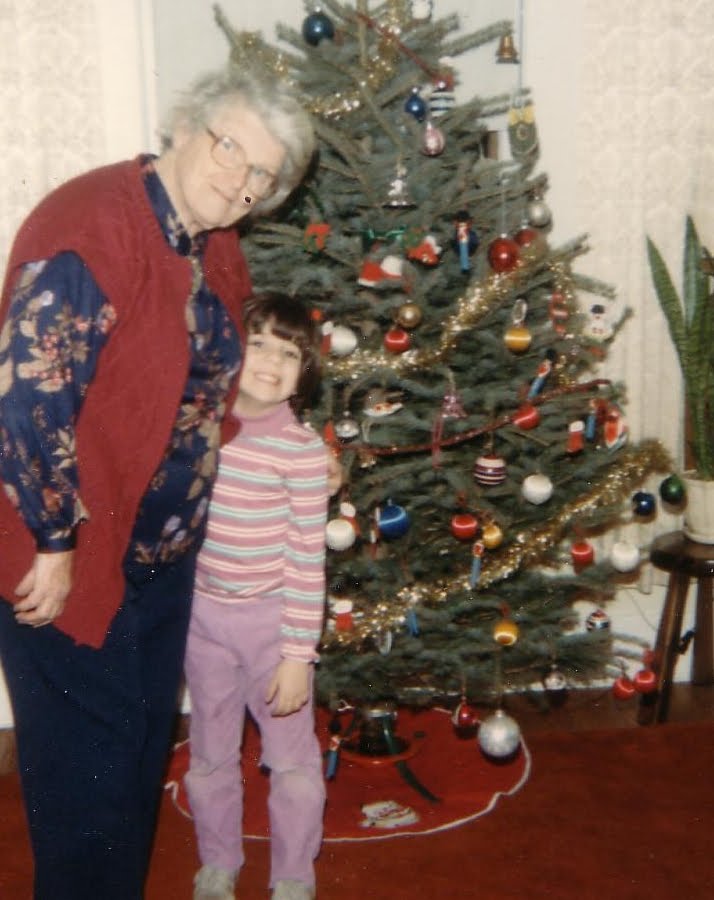
In lieu of a sound clip, I will include a photo of myself and one of my favorite saints.

For a jaded old church nerd like me, it takes something special to move me (for instance, it's rare that the Agnus Dei lights my fire). Certain liturgical elements, thanks to their rarity, catch my attention (I'm a sucker for a good Sequence) and a litany is one of them. This weekend we sang Becker's popular setting of the litany. As we invoked saint after saint, while the newest members of the presbyterate lay prostrate, I became unexpectedly emotional.
The assembly repeated "pray for us" as we called upon saints familiar (Mary & Joseph), arcane (Chrysogonus & Hippolytus) and particular to our Jesuit community (Ignatius & Francis). On other occasions I have sung litanies that put Oscar Romero, Dorothy Day and Pedro Arrupe alongside Linus, Cletus and Clement. Where do we get the confidence to call upon our heroes to petition God on our behalf?
Any Catholic concerned with public perception keeps all this saints hoo-ha quiet if they can. Maybe we hedge a bit, acknowledging that we admire these people, but leaving out the more radical part of our claim to the saints: we believe there is something so generous and holy about them that they will back up our prayers.
As we asked for prayers on Saturday, what really took my breath away was the list we had in front of us, one that only skims the surface of our wealth of heavenly intercessors. And even when we mumble our response, or can't hear the cantor, or let our eyes and minds wander, the saints are still on our side, welcoming us into their communion. What greater advocates can we have than the saints named and unnamed, living in love with God forever?
[Two notes on the litany - I tried to find a recording of the Becker setting to which to link, but I was unable to find one that wasn't either out of tune, goopily sentimental, or one singer overdubbing his own responses to the invocations. Also, after the ordination I said something flippant about not knowing why a piece of music that is mildly cheesy was so moving. Luckily I was with the Jesuits, one of whom had a characteristic reply enumerating all of the evidence for this being the superior setting of the litany. Typical]
In lieu of a sound clip, I will include a photo of myself and one of my favorite saints.
Saturday, April 3, 2010
Not only my feet but my head and hands as well
This just in: foot washing is uncomfortable.
Two nights ago Catholic churches of the Roman Rite and certain other Christian denominations commemorated the Last Supper with a ritual that includes washing the feet of twelve members of the community. It is done once a year, and it is usually moderately clumsy and awkward. All the more reason to do it, I say - liturgy is not meant to make us warm and fuzzy all the time.
How often do we find ourselves struggling against God's will for us, struggling to get out of the chair before anyone puts their hands on our feet? We know best what God should do for us, and if washing our feet isn't part of the plan, best to get out of there before things get weird. Sit down, we hear. This is happening. I'm in charge.
So we endure what is awkward, keeping our ears open for the divine voice amid the discomfort.
Two nights ago Catholic churches of the Roman Rite and certain other Christian denominations commemorated the Last Supper with a ritual that includes washing the feet of twelve members of the community. It is done once a year, and it is usually moderately clumsy and awkward. All the more reason to do it, I say - liturgy is not meant to make us warm and fuzzy all the time.
How often do we find ourselves struggling against God's will for us, struggling to get out of the chair before anyone puts their hands on our feet? We know best what God should do for us, and if washing our feet isn't part of the plan, best to get out of there before things get weird. Sit down, we hear. This is happening. I'm in charge.
So we endure what is awkward, keeping our ears open for the divine voice amid the discomfort.
Friday, March 26, 2010
My heart broke loose on the wind
In the 1200s St Dominic preached against the Albigensian heresy.
That’s not the lede I expected to write about my recent trip to the symphony, but all of my reflections on the premiere of Lieberson’s Songs of Love and Sorrow led me back to a lesson I’d taught on Dominic earlier that day. Composed as a companion piece for Lieberson’s Neruda Songs, Songs of Love and Sorrow also sets poetry by Pablo Neruda, this time putting the powerful Chilean poetry in the mouth of a baritone rather than a mezzo-soprano.
As a stereotypical stodgy New Englander, a lot of Neruda’s work feels foreign to me. His expressions of emotion are tactile and earthy, with a lack of inhibition that makes me feel even more uptight in comparison. I’m probably not alone in approaching Neruda (and anything else that challenges me that much) with an overly intellectual detachment, trying to analyze its rich physicality with the sobriety of an over-trained mind. Plena mujer, manzana carnal, luna caliente [Full woman, flesh-apple, hot moon] – for we priggish Americans, it can be easier to hold images like that at arm’s length.
That detachment was impossible last night. Lieberson’s evocative setting energized Neruda’s poetry, but even more revelatory was the very experience of live music.
We are bodies, living in a world we can touch, feel, see, smell, hear. The sonic experience of orchestral forces in a live setting is incomparable, a fact of which I am reminded on every trip to the symphony. The magic of skill and intention forming sound waves that surround us is a perfect example of the blessings of our physical world. Add to that the power of a perfectly calibrated human voice – an example of every part of the human body working together perfectly, art truly incarnate - and you have a recipe for transformation.
Cantas y al sol y a cielo con tu canto/tu voz desgrana el cereal del día,/hablan los pinos con su lengua verde: trinan todas la saves del invierno. [You sing, and your voice peels the husk /of the day’s grain, your song with the sun and the sky,/the pine trees speak with their green tongue:/all the birds of the winter whistle.]
A rich human voice, an orchestra, an emotive musical setting of sensual poetry created the perfect storm, tearing me away from the elite intellectualism honed over many years in the ivory tower. My brain was ripped out and I was only body, heart and blood and guts and skin.
So what does this all have to do with St Dominic? The Albigensians, like many before and after them, professed that the human body and all other matter was evil. Although the Albigensian heresy died out in the decades following Dominic’s preaching, that principle still lives in the hearts and minds of many Christians. We go to church and are scared to open our mouths and sing, never mind move our bodies or touch the person next to us. We believe our faith and our identity are found in what we think rather than how we embody that belief through physical action. Trying to stay on the right side of gluttony we avoid any indulgences, ignoring the many gifts of God that come to us through our sensations. We’re mostly brain, a little heart, and no guts. We’re scared – of sin, of our appetites, of our power.
But to look at the people who truly embrace the physicality of our creation, they don’t slide into gluttony or sin but achieve something truly mystical. Earth’s crammed with heaven/and every common bush afire with God (Elizabeth Barrett Browning). By means of all created things, the divine assails us, penetrates us, and molds us (Pierre Teilhard de Chardin). The king saw his image/in your faces/when he made you mirrors of/all heaven's graces,/a garden of surpassing/sweetness, a fragrance/wafting all graciousness (Hildegard von Bingen).
It’s easy to spend a lot of time with my head in the clouds, hoping for things not seen. But everything in the here and now was created and proclaimed good – including us. What a gift it is to get out of our heads and into our bodies, touching the earth that sustains us, touched by the art that occasionally inflames our senses until our old ways burn up and we become something new in their clean, pure ash.
And I, infinitesimal being,
drunk with the great starry
void,
likeness, image of
mystery,
I felt myself a pure part
of the abyss,
I wheeled with the stars,
my heart broke loose on the wind. - Neruda
That’s not the lede I expected to write about my recent trip to the symphony, but all of my reflections on the premiere of Lieberson’s Songs of Love and Sorrow led me back to a lesson I’d taught on Dominic earlier that day. Composed as a companion piece for Lieberson’s Neruda Songs, Songs of Love and Sorrow also sets poetry by Pablo Neruda, this time putting the powerful Chilean poetry in the mouth of a baritone rather than a mezzo-soprano.
As a stereotypical stodgy New Englander, a lot of Neruda’s work feels foreign to me. His expressions of emotion are tactile and earthy, with a lack of inhibition that makes me feel even more uptight in comparison. I’m probably not alone in approaching Neruda (and anything else that challenges me that much) with an overly intellectual detachment, trying to analyze its rich physicality with the sobriety of an over-trained mind. Plena mujer, manzana carnal, luna caliente [Full woman, flesh-apple, hot moon] – for we priggish Americans, it can be easier to hold images like that at arm’s length.
That detachment was impossible last night. Lieberson’s evocative setting energized Neruda’s poetry, but even more revelatory was the very experience of live music.
We are bodies, living in a world we can touch, feel, see, smell, hear. The sonic experience of orchestral forces in a live setting is incomparable, a fact of which I am reminded on every trip to the symphony. The magic of skill and intention forming sound waves that surround us is a perfect example of the blessings of our physical world. Add to that the power of a perfectly calibrated human voice – an example of every part of the human body working together perfectly, art truly incarnate - and you have a recipe for transformation.
Cantas y al sol y a cielo con tu canto/tu voz desgrana el cereal del día,/hablan los pinos con su lengua verde: trinan todas la saves del invierno. [You sing, and your voice peels the husk /of the day’s grain, your song with the sun and the sky,/the pine trees speak with their green tongue:/all the birds of the winter whistle.]
A rich human voice, an orchestra, an emotive musical setting of sensual poetry created the perfect storm, tearing me away from the elite intellectualism honed over many years in the ivory tower. My brain was ripped out and I was only body, heart and blood and guts and skin.
So what does this all have to do with St Dominic? The Albigensians, like many before and after them, professed that the human body and all other matter was evil. Although the Albigensian heresy died out in the decades following Dominic’s preaching, that principle still lives in the hearts and minds of many Christians. We go to church and are scared to open our mouths and sing, never mind move our bodies or touch the person next to us. We believe our faith and our identity are found in what we think rather than how we embody that belief through physical action. Trying to stay on the right side of gluttony we avoid any indulgences, ignoring the many gifts of God that come to us through our sensations. We’re mostly brain, a little heart, and no guts. We’re scared – of sin, of our appetites, of our power.
But to look at the people who truly embrace the physicality of our creation, they don’t slide into gluttony or sin but achieve something truly mystical. Earth’s crammed with heaven/and every common bush afire with God (Elizabeth Barrett Browning). By means of all created things, the divine assails us, penetrates us, and molds us (Pierre Teilhard de Chardin). The king saw his image/in your faces/when he made you mirrors of/all heaven's graces,/a garden of surpassing/sweetness, a fragrance/wafting all graciousness (Hildegard von Bingen).
It’s easy to spend a lot of time with my head in the clouds, hoping for things not seen. But everything in the here and now was created and proclaimed good – including us. What a gift it is to get out of our heads and into our bodies, touching the earth that sustains us, touched by the art that occasionally inflames our senses until our old ways burn up and we become something new in their clean, pure ash.
And I, infinitesimal being,
drunk with the great starry
void,
likeness, image of
mystery,
I felt myself a pure part
of the abyss,
I wheeled with the stars,
my heart broke loose on the wind. - Neruda
Monday, December 28, 2009
What I do is me, for that I came.
Even for someone as prone to tears as I am, I know I have finished a good biography if I cry at the end when the subject dies. The last book that moved me like that was Christophe Wolfe’s biography of J. S. Bach, and it goes without saying that I knew what was coming in the end. “Winston & Franklin” on the other hand, made me eager for the demise of both protagonists. Last night I got misty reading the end of Gerard Manley Hopkins: A Life by Paul Mariani. I’ve always admired Hopkins’ poetry (and Mariani’s, for that matter) but had only a passing familiarity with the circumstances of his life - I knew he was a convert, a Jesuit, lived throughout Great Britain, died young, achieved no literary fame in his lifetime.
On the other side of having read this biography, that’s still the story. I now have a greater understanding of his trademark sprung rhythm, a term for which I’d only had cocktail-party level comprehension. New Hopkinsian terms like inscape and instress have worked their way into my vocabulary and will likely disappear once I’m off what promises to be a “Hopkins kick” and have moved on to another temporary obsession.
Every biographer is going to focus on one element or another of a subject’s life, and throughout much of this book we read about Hopkins desire for sacrifice - he sacrifices reputation and relationship to ‘swim the Tiber’, he sacrifices his writing and creativity seeking obedience to his order, and he sacrifices much of his health in that same spirit of obedience. From what I know of Mariani’s other writing, the biographer has undertaken spiritual journeys of his own, including the Spiritual Exercises. The knowledge, both intellectual and spiritual, of Hopkins’ Catholic (and Jesuit) world makes all the difference in his writing about the poet. I imagine it is hard to write about a man who punished himself too much - who probably took himself too seriously - while loving and respecting the man and his actions. Mariani never laughs at or dismisses Hopkins’ deep desire for sacrifice or communion with God.
What I do is me, for that I came. I know I’m not the only person for whom that is one of Hopkins’ most memorable lines. My little liturgist rises up at this affirmation that what we do matters - not what we think, or believe, or intend, or someday might do.
I realized about 2/3 of the way through the book that I was basically reading from poem to poem. Though I gave attention to and was interested in the circumstances of his life, all the while I was measuring out Hopkins’ life in sonnets. I turned each page hoping to see more of his familiar poetry, accompanied by the circumstances of its writing and by Mariani’s unparalleled insights on its inspiration. But would the poet have read his own life the same way? Would he have agreed with posterity on the reason for which he came?
What I do is me, for that I came. We can think we know what it is we do, for what it is we come, but perhaps like our friend Gerard that which survives of us won’t resemble our dreams and intentions. Knowing the future’s uncertainty what else can we do other than catch fire, draw flame, keep grace, offer ourselves over to God and to each other? Perhaps Hopkins would have been even more prolific, more genius (is that a possibility?) had he not indulged his religious scruples. But the brilliance that we have from him was born in that intersection of devastating sacrifice and creative indulgence. His reality - his ‘me’ - was the filthy manger in which his spark took flesh.
For that I came. The eager and inspired want to know what “that” is. It is music, it is sport, it is health, it is justice - we have ideas of our purpose and our end. Or maybe we don’t. Maybe we just slog through, with no sense of what makes us most ‘me’, what will survive, and what may reach beyond us across years to help others suss out dappled things, bright wings, God’s grandeur, our end.
On the other side of having read this biography, that’s still the story. I now have a greater understanding of his trademark sprung rhythm, a term for which I’d only had cocktail-party level comprehension. New Hopkinsian terms like inscape and instress have worked their way into my vocabulary and will likely disappear once I’m off what promises to be a “Hopkins kick” and have moved on to another temporary obsession.
Every biographer is going to focus on one element or another of a subject’s life, and throughout much of this book we read about Hopkins desire for sacrifice - he sacrifices reputation and relationship to ‘swim the Tiber’, he sacrifices his writing and creativity seeking obedience to his order, and he sacrifices much of his health in that same spirit of obedience. From what I know of Mariani’s other writing, the biographer has undertaken spiritual journeys of his own, including the Spiritual Exercises. The knowledge, both intellectual and spiritual, of Hopkins’ Catholic (and Jesuit) world makes all the difference in his writing about the poet. I imagine it is hard to write about a man who punished himself too much - who probably took himself too seriously - while loving and respecting the man and his actions. Mariani never laughs at or dismisses Hopkins’ deep desire for sacrifice or communion with God.
What I do is me, for that I came. I know I’m not the only person for whom that is one of Hopkins’ most memorable lines. My little liturgist rises up at this affirmation that what we do matters - not what we think, or believe, or intend, or someday might do.
I realized about 2/3 of the way through the book that I was basically reading from poem to poem. Though I gave attention to and was interested in the circumstances of his life, all the while I was measuring out Hopkins’ life in sonnets. I turned each page hoping to see more of his familiar poetry, accompanied by the circumstances of its writing and by Mariani’s unparalleled insights on its inspiration. But would the poet have read his own life the same way? Would he have agreed with posterity on the reason for which he came?
What I do is me, for that I came. We can think we know what it is we do, for what it is we come, but perhaps like our friend Gerard that which survives of us won’t resemble our dreams and intentions. Knowing the future’s uncertainty what else can we do other than catch fire, draw flame, keep grace, offer ourselves over to God and to each other? Perhaps Hopkins would have been even more prolific, more genius (is that a possibility?) had he not indulged his religious scruples. But the brilliance that we have from him was born in that intersection of devastating sacrifice and creative indulgence. His reality - his ‘me’ - was the filthy manger in which his spark took flesh.
For that I came. The eager and inspired want to know what “that” is. It is music, it is sport, it is health, it is justice - we have ideas of our purpose and our end. Or maybe we don’t. Maybe we just slog through, with no sense of what makes us most ‘me’, what will survive, and what may reach beyond us across years to help others suss out dappled things, bright wings, God’s grandeur, our end.
Sunday, November 15, 2009
Seasons
A few years ago I spent three weeks in Malibu at the beginning of the summer. I returned refreshed to a Boston that had suffered a brutal heat wave in my absence, and was often asked how the weather was. Although I'd never needed a hat or gloves, and I'd never sweat through my clothes, I hadn't been totally satisfied with three weeks of 70 degrees and sunny. I didn't have the nerve to confess this to my friends and family, but I had found that monotonously idyllic weather boring.
Years are funny things. They're long enough that we can't really comprehend their span, but short enough that they can seem to pass quickly, and we give a lot of meaning to this number of 365 days. In New England we get a little of everything in each turn of the earth around the sun - snow & freezing temperatures, humidity and blazing heat. Although the warm weather seems terribly distant each February, we never really go long enough without a particular season to forget what it is all about.
I think that's why I have always liked the liturgical calendar so much. Every element of Christian living is given it's due at least once a year. No matter what the seasons of our lives are we are called to ponder the whole experience during the course of the year. We celebrate new life and the Resurrection even if our own lives feel like an unrelenting penitential season. When life is joyful we still pause for sorrowful remembrance and contrition. We go through it all - and then we cycle around and go through it all again.
This weekend I finally packed up my swimming and biking gear from triathlon training this summer. I went into fall with good intentions for keeping up with those sports, but the demands of work and music have left me no time to even find a gym with a pool, never mind swim in that pool once I've found it. I keep saying "I miss swimming", and I do miss the feel of the water on my body and the rhythm of my arms stroking through the water. But what I really miss is the season: bright mornings leading into days that would be longer than the nights, early breakfasts in my friends' kitchen, running my towel through the dryer in the sunny laundry room before I stuffed it into a backpack and got back on my bike.
Years are funny things. They're long enough that we can't really comprehend their span, but short enough that they can seem to pass quickly, and we give a lot of meaning to this number of 365 days. In New England we get a little of everything in each turn of the earth around the sun - snow & freezing temperatures, humidity and blazing heat. Although the warm weather seems terribly distant each February, we never really go long enough without a particular season to forget what it is all about.
I think that's why I have always liked the liturgical calendar so much. Every element of Christian living is given it's due at least once a year. No matter what the seasons of our lives are we are called to ponder the whole experience during the course of the year. We celebrate new life and the Resurrection even if our own lives feel like an unrelenting penitential season. When life is joyful we still pause for sorrowful remembrance and contrition. We go through it all - and then we cycle around and go through it all again.
This weekend I finally packed up my swimming and biking gear from triathlon training this summer. I went into fall with good intentions for keeping up with those sports, but the demands of work and music have left me no time to even find a gym with a pool, never mind swim in that pool once I've found it. I keep saying "I miss swimming", and I do miss the feel of the water on my body and the rhythm of my arms stroking through the water. But what I really miss is the season: bright mornings leading into days that would be longer than the nights, early breakfasts in my friends' kitchen, running my towel through the dryer in the sunny laundry room before I stuffed it into a backpack and got back on my bike.
Tuesday, September 1, 2009
Funerals, Media, and God's People
My first inclination was to keep commentary on the Kennedy funeral to a minimum, mostly because it just seems tacky to Monday morning quarterback a Mass of Christian Burial. But I have spent the last few days surrounded by church types who all have an opinion, plus I am under strict orders to post tonight, so I’ll share my thoughts regardless. Between thoughts on the liturgy and reflections on the concepts of the liturgy as expressed by commentators and media, trying to even think about this has been so meta that I could be sick. Maybe writing will help sort it all out.
Obviously I was very interested in what was likely to be the most public display of Catholic ritual in recent memory. As I was running early Saturday morning (I had to squeeze in a long run before the coverage started), I thought to myself “Will people still think that Catholicism is supremely weird after this whole thing is over?”
Let’s start with what I know best: music. Both beautiful and disappointing. First, it was the one thing that the networks couldn’t seem to broadcast right. During the opening song I surfed all over the place trying to find a balance that didn’t include heaping portions of grating tenor. From what I could tell, words to the opening song were printed in the program, as it appeared people were singing along. I think it would have been powerful to hear the sound of the assembly. I also hope that choosing “Holy God We Praise Thy Name” will encourage some other folks to select that for their funeral, rather than schlock like One Bread One Body and Hail Mary: Gentle Woman (both of which I am singing for a funeral tomorrow).
I was horribly disappointed that the ordinary of the mass wasn’t sung. I’ll admit that there are two issues here. One is that modern American Catholicism does not have a suitably dignified mass setting. Observing the family and their familiarity with the liturgy, I know that they would have reflexively sung along with whatever mass parts the organist cued up. But do we really want Mass of Creation as the public face of Catholicism (nothing personal Marty)?
The second issue is the pervasive entertainment model of the liturgy. Assemblies become audiences, song leaders become soloists, and worship aids become programs. The very pieces of the liturgy that we all know inside and out, the words and melodies that pop out of our mouths without our even knowing it (like Mass of Creation – and even One Bread One Body) are the pieces that we are most willing to cut if we feel that things are going to run a little long. As if those four measures of intro on Haugen’s Sanctus are going to make or break a liturgy with three post-communion reflections and a twenty minute homily. The fact that the Song of Commendation wasn’t sung was the final blow to this lover of communal singing.
One idea that motivates me when ministering at funerals is that our liturgy gives us a glimpse of the eternal life that we hope and pray the departed is enjoying. There was beautiful, sublime music at the funeral on Saturday. Still, as hopeful as I am that Susan Graham and Placido Domingo will enter into the beatific vision when the time comes, their’s are not the voices I want next to me in the celestial choir. I want my mother switching octaves as the music demands. I want my brother jokingly singing JamBandforJesus music the way he does over the phone on Sunday nights. I want my father imitating my “howling”. And, for what it’s worth, I want a big honkin’ timpani roll each time we launch back into singing Holy Holy Holy. The funerals that give me the most hope are ones that are filled with the sound of the voices of God’s people.
A few comments on the media coverage, which I thought was respectful overall. It was perfect to keep the video cameras away from the communion procession; nothing has irked me more in the last few years than the politicization of the Eucharist. Brian Williams’ random editorializing during the Sign of Peace about its recent introduction into liturgical practice was somewhat amusing. Hearing Andrea Mitchell refer to the pall as the ‘fabric’ made my heart sink a little. If you insist on commentary on a religious event, it would be nice to have people who knew their stuff doing the commenting.
But in the end, this wasn’t just a religious event, and it was never going to be. A lot of newspapers sanitized the religious side of things, talking about the nice speakers and the beautiful “performances”. Still, there are some of us out there who are in on the secret, who know what the funeral Mass is about and know how noteworthy and admirable it is that a public person and his public family wanted this Catholic service. We are the ones who got a subversive rush when Cardinal Seán recited the Latin prayers before the censing of the casket. Religion is a piece of identity, and many of us who shared a religious identity with the Senator likely hoped to see even more of that identity shown off for all to see. I bet I’m not the only person who asked “Will people still think that Catholicism is supremely weird after this whole thing is over?” and then thought “I hope so”.
Obviously I was very interested in what was likely to be the most public display of Catholic ritual in recent memory. As I was running early Saturday morning (I had to squeeze in a long run before the coverage started), I thought to myself “Will people still think that Catholicism is supremely weird after this whole thing is over?”
Let’s start with what I know best: music. Both beautiful and disappointing. First, it was the one thing that the networks couldn’t seem to broadcast right. During the opening song I surfed all over the place trying to find a balance that didn’t include heaping portions of grating tenor. From what I could tell, words to the opening song were printed in the program, as it appeared people were singing along. I think it would have been powerful to hear the sound of the assembly. I also hope that choosing “Holy God We Praise Thy Name” will encourage some other folks to select that for their funeral, rather than schlock like One Bread One Body and Hail Mary: Gentle Woman (both of which I am singing for a funeral tomorrow).
I was horribly disappointed that the ordinary of the mass wasn’t sung. I’ll admit that there are two issues here. One is that modern American Catholicism does not have a suitably dignified mass setting. Observing the family and their familiarity with the liturgy, I know that they would have reflexively sung along with whatever mass parts the organist cued up. But do we really want Mass of Creation as the public face of Catholicism (nothing personal Marty)?
The second issue is the pervasive entertainment model of the liturgy. Assemblies become audiences, song leaders become soloists, and worship aids become programs. The very pieces of the liturgy that we all know inside and out, the words and melodies that pop out of our mouths without our even knowing it (like Mass of Creation – and even One Bread One Body) are the pieces that we are most willing to cut if we feel that things are going to run a little long. As if those four measures of intro on Haugen’s Sanctus are going to make or break a liturgy with three post-communion reflections and a twenty minute homily. The fact that the Song of Commendation wasn’t sung was the final blow to this lover of communal singing.
One idea that motivates me when ministering at funerals is that our liturgy gives us a glimpse of the eternal life that we hope and pray the departed is enjoying. There was beautiful, sublime music at the funeral on Saturday. Still, as hopeful as I am that Susan Graham and Placido Domingo will enter into the beatific vision when the time comes, their’s are not the voices I want next to me in the celestial choir. I want my mother switching octaves as the music demands. I want my brother jokingly singing JamBandforJesus music the way he does over the phone on Sunday nights. I want my father imitating my “howling”. And, for what it’s worth, I want a big honkin’ timpani roll each time we launch back into singing Holy Holy Holy. The funerals that give me the most hope are ones that are filled with the sound of the voices of God’s people.
A few comments on the media coverage, which I thought was respectful overall. It was perfect to keep the video cameras away from the communion procession; nothing has irked me more in the last few years than the politicization of the Eucharist. Brian Williams’ random editorializing during the Sign of Peace about its recent introduction into liturgical practice was somewhat amusing. Hearing Andrea Mitchell refer to the pall as the ‘fabric’ made my heart sink a little. If you insist on commentary on a religious event, it would be nice to have people who knew their stuff doing the commenting.
But in the end, this wasn’t just a religious event, and it was never going to be. A lot of newspapers sanitized the religious side of things, talking about the nice speakers and the beautiful “performances”. Still, there are some of us out there who are in on the secret, who know what the funeral Mass is about and know how noteworthy and admirable it is that a public person and his public family wanted this Catholic service. We are the ones who got a subversive rush when Cardinal Seán recited the Latin prayers before the censing of the casket. Religion is a piece of identity, and many of us who shared a religious identity with the Senator likely hoped to see even more of that identity shown off for all to see. I bet I’m not the only person who asked “Will people still think that Catholicism is supremely weird after this whole thing is over?” and then thought “I hope so”.
Wednesday, July 15, 2009
The Lord is Kind and Merciful
It's been a week and a day since my family gathered back home for the funeral. As a liturgy buff, I'm not one of those people who says they "hate funerals" - I actually don't mind funerals, it's people dying that brings me down.
If I had anything to do with it, this funeral was going to be a barnburner, for lack of a better word. One of the things I find so helpful about liturgy is that it lets us say what we want to say using words that have been used before, so we don't foul it all up because we are sad. In a situation so devastating we wanted to make sure everything was right - the music, the readings, the prayer of the faithful, the programs. All of these things can help to sum up our belief in the resurrection, in family, and in mercy. The words we use matter.
So that's my academic, overthought rambling on liturgy. Why was it important, in truth, for me? Because I needed to see that I wasn't the only person who had been blind with grief for the previous week and a half. Because when I sang Psalm 103: The Lord is Kind and Merciful I knew that I had a chance to say what I believed, to stand in front of people I loved and sing "Bless the Lord, O my soul" and really mean it in spite of everything. It is rare that singing matters so much to me.
Yesterday was the memorial of Blessed Kateri Tekakwitha, the only Native American on the path to canonization. I learned during reflection at midday prayer yesterday that Tekakwitha was the moniker given to her due to her partial blindness, and that it means "one who gropes in the dark". I can identify with that; and I think most of us can. I have been groping through the darkness of grief with my family, mulling over the wretched questions that we know we can never answer. But day after day I think we all grope through the dark, grabbing onto what we can to orient us, be it liturgy, family, friends, or simple hope.
If I had anything to do with it, this funeral was going to be a barnburner, for lack of a better word. One of the things I find so helpful about liturgy is that it lets us say what we want to say using words that have been used before, so we don't foul it all up because we are sad. In a situation so devastating we wanted to make sure everything was right - the music, the readings, the prayer of the faithful, the programs. All of these things can help to sum up our belief in the resurrection, in family, and in mercy. The words we use matter.
So that's my academic, overthought rambling on liturgy. Why was it important, in truth, for me? Because I needed to see that I wasn't the only person who had been blind with grief for the previous week and a half. Because when I sang Psalm 103: The Lord is Kind and Merciful I knew that I had a chance to say what I believed, to stand in front of people I loved and sing "Bless the Lord, O my soul" and really mean it in spite of everything. It is rare that singing matters so much to me.
Yesterday was the memorial of Blessed Kateri Tekakwitha, the only Native American on the path to canonization. I learned during reflection at midday prayer yesterday that Tekakwitha was the moniker given to her due to her partial blindness, and that it means "one who gropes in the dark". I can identify with that; and I think most of us can. I have been groping through the darkness of grief with my family, mulling over the wretched questions that we know we can never answer. But day after day I think we all grope through the dark, grabbing onto what we can to orient us, be it liturgy, family, friends, or simple hope.
Sunday, June 7, 2009
River of Glory - for all the LAG kids in the house
Today I heard River of Glory sung by a choir that is not my group from BC, and let's just say it did not exactly inspire the same reveries as the last time I heard it.
Monday, May 18, 2009
NPR lets me down
In some of the circles I frequent one’s cultural literacy is indicated by the fervor with which they support National Public Radio. For years I told people I liked it when I really didn’t. Then I owned to not really liking it, and around the same time I started to enjoy listening to it. I really became a fan when the economy took a bad turn. I was out most evenings at BC this year, so my winter commute back to Southie usually involved some commentary on the economy and the soothing tones of the NPR hosts.
Today I ran an errand mid-day and my radio was tuned to NPR. There was an hour long interview with Ryan Murphy, who created Nip/Tuck and who is currently debuting Glee, the new Fox show about a high school choir. The host of Fresh Air, Terry Gross, made this comment at the outset: “I had never heard of such a thing as a show choir. I assume this wasn’t just made up for your show”.
Oooh, that might be the blog post I have been searching for this week, I thought initially. Something pithy about how you haven’t lived if you don’t know what show choir is, and that would be the end of it. But later in the hour, after a few stops in stores, I started the car up again to hear the Terry Gross riffing on religion. That’s when things got interesting.
She brought it up because Murphy is gay. Her first question was about how his parents had dealt with him coming out since they were “religious” – there was no mention of creed or denomination, just the vague moniker of "religious" that seemed in context to be synonymous with homophobic. It was Murphy who brought up that his family was Catholic and that he had gone to Catholic school. “How did you endure Catholic school?” was the next question.
As the conversation progressed, Murphy explained that when he was younger he wanted to be Pope and had been told by his mother that the way someone became Pope was by not sinning at all during the day. So every day 6-year old Murphy would get up and pray that he wouldn’t sin at all that day. To me, that is charming evidence of the desire to do good. To the host this afternoon, it was the funniest thing she had ever heard.
She really wouldn’t let up on the Pope thing, and Murphy went on about how he had been fascinated by the lives of the Saints, and that part of his motivation was that he thought it would be ‘cool’ to choose who gets to be a saint. The interviewer still couldn’t believe that he had wanted to be Pope; she was amused when he admitted to having ‘practiced’ with a fake crozier – all I could think of were the dozens of friends I have who admit to having ‘played’ priest, or ‘played’ mass when they were growing up.
Murphy spoke really eloquently about how his Catholic upbringing had impacted his art. He gave the most credit to the ‘storytelling and theatricality’ (his words) of Catholic liturgy and sacramentals. It seems that his religious background is life-giving to him, and some follow-up questions on that would have made this into the interview that I wanted to hear. Instead Gross hammered home this idea that a Catholic upbringing must have been damaging to him, and she was operating under the assumption that he was now anti-Catholic.
One of the final questions was “How have you dealt with the fact that you are now essentially persona non grata in the Catholic church?” Luckily I restrained myself from screaming at the radio so that I could hear his answer, in which he refuted the premise of her question much better than my irked tirade would have. He said, in short “I still go to Catholic Church, and there are other gay people there, and everyone is warm and welcoming”. Amen, brother.
Today I ran an errand mid-day and my radio was tuned to NPR. There was an hour long interview with Ryan Murphy, who created Nip/Tuck and who is currently debuting Glee, the new Fox show about a high school choir. The host of Fresh Air, Terry Gross, made this comment at the outset: “I had never heard of such a thing as a show choir. I assume this wasn’t just made up for your show”.
Oooh, that might be the blog post I have been searching for this week, I thought initially. Something pithy about how you haven’t lived if you don’t know what show choir is, and that would be the end of it. But later in the hour, after a few stops in stores, I started the car up again to hear the Terry Gross riffing on religion. That’s when things got interesting.
She brought it up because Murphy is gay. Her first question was about how his parents had dealt with him coming out since they were “religious” – there was no mention of creed or denomination, just the vague moniker of "religious" that seemed in context to be synonymous with homophobic. It was Murphy who brought up that his family was Catholic and that he had gone to Catholic school. “How did you endure Catholic school?” was the next question.
As the conversation progressed, Murphy explained that when he was younger he wanted to be Pope and had been told by his mother that the way someone became Pope was by not sinning at all during the day. So every day 6-year old Murphy would get up and pray that he wouldn’t sin at all that day. To me, that is charming evidence of the desire to do good. To the host this afternoon, it was the funniest thing she had ever heard.
She really wouldn’t let up on the Pope thing, and Murphy went on about how he had been fascinated by the lives of the Saints, and that part of his motivation was that he thought it would be ‘cool’ to choose who gets to be a saint. The interviewer still couldn’t believe that he had wanted to be Pope; she was amused when he admitted to having ‘practiced’ with a fake crozier – all I could think of were the dozens of friends I have who admit to having ‘played’ priest, or ‘played’ mass when they were growing up.
Murphy spoke really eloquently about how his Catholic upbringing had impacted his art. He gave the most credit to the ‘storytelling and theatricality’ (his words) of Catholic liturgy and sacramentals. It seems that his religious background is life-giving to him, and some follow-up questions on that would have made this into the interview that I wanted to hear. Instead Gross hammered home this idea that a Catholic upbringing must have been damaging to him, and she was operating under the assumption that he was now anti-Catholic.
One of the final questions was “How have you dealt with the fact that you are now essentially persona non grata in the Catholic church?” Luckily I restrained myself from screaming at the radio so that I could hear his answer, in which he refuted the premise of her question much better than my irked tirade would have. He said, in short “I still go to Catholic Church, and there are other gay people there, and everyone is warm and welcoming”. Amen, brother.
Sunday, May 10, 2009
On being where I'm meant to be, and finding God in the woods.
Those students who use this blog as a procrastination technique had a disappointing week this week, as I didn’t post during finals when procrastination is needed the most. The reason I didn’t write much is simple busy-ness. I was in a great production at Boston College featuring alumni who work in the arts and current students. We had an open dress for students who wanted to come on Friday night, and then last night was the ticketed benefit. As I was standing back stage waiting to make my entrance while the students sang and the band played, I got goosebumps as I realized that I was doing exactly what I wanted to do and that I was exactly where I wanted to be. I have worked so hard to improve as a performer, and I am so lucky not only to have opportunities to perform, but to have the perspective to appreciate my opportunities.
On a slightly different note, tonight was the last mass out at BC with my darling choir. I remember when I was growing up it was very cool to say “I don’t believe I need to go to Church, I just like to go out to the woods to pray”. I was pretty skeptical that those people ever actually went out in the woods, but I think I also was starting to have an inkling that faith is not just about us and God, but about us and us. I knew that I found God my family, but that was so normal that it almost seemed like cheating, and I didn’t feel like I could make the argument that you need others to encounter God without some stronger evidence.
I no longer have much of an interest in making any arguments, but I have a little more evidence toward my initial thesis. Worshipping with the community at Boston College brings me closer to God. I have people there who know me, and I see the students there live their faith every day in a way that educates me. They walk the walk when we leave liturgy, and in my limited time that I am on campus I am able to see that. We come together in love every week, and I believe more strongly in God’s grace because I hear their testimony to it.
It’s hard to find that these days, especially for Catholics. Parishes are not always the neighborhood centers they used to be, and it is easy for us to gather for worship not as a new Body but as collection of isolated islands, still bearing our burdens alone. On the occasions that I imagine what it was like for the early church (I probably do that more than most people, but still not so often that it’s too weird), I visualize personalities coming together. It’s not that these people decided to start a Church because they were all best friends, but because the power of their experience of Christ bound them to each other. Their shared experience made the challenges of being together and loving each other worth bearing. Their community was not about being happy or liking each other, not about power or eloquence (or even music) but about fellowship in the Risen Christ.
The point of this rambling? I experience God’s grace through the community to whom I purportedly minister. I am fortunate and I am grateful.
On a slightly different note, tonight was the last mass out at BC with my darling choir. I remember when I was growing up it was very cool to say “I don’t believe I need to go to Church, I just like to go out to the woods to pray”. I was pretty skeptical that those people ever actually went out in the woods, but I think I also was starting to have an inkling that faith is not just about us and God, but about us and us. I knew that I found God my family, but that was so normal that it almost seemed like cheating, and I didn’t feel like I could make the argument that you need others to encounter God without some stronger evidence.
I no longer have much of an interest in making any arguments, but I have a little more evidence toward my initial thesis. Worshipping with the community at Boston College brings me closer to God. I have people there who know me, and I see the students there live their faith every day in a way that educates me. They walk the walk when we leave liturgy, and in my limited time that I am on campus I am able to see that. We come together in love every week, and I believe more strongly in God’s grace because I hear their testimony to it.
It’s hard to find that these days, especially for Catholics. Parishes are not always the neighborhood centers they used to be, and it is easy for us to gather for worship not as a new Body but as collection of isolated islands, still bearing our burdens alone. On the occasions that I imagine what it was like for the early church (I probably do that more than most people, but still not so often that it’s too weird), I visualize personalities coming together. It’s not that these people decided to start a Church because they were all best friends, but because the power of their experience of Christ bound them to each other. Their shared experience made the challenges of being together and loving each other worth bearing. Their community was not about being happy or liking each other, not about power or eloquence (or even music) but about fellowship in the Risen Christ.
The point of this rambling? I experience God’s grace through the community to whom I purportedly minister. I am fortunate and I am grateful.
Sunday, April 12, 2009
Triduum recap
Did you know the Triduum ends at sundown on Easter Sunday? That means it is ending RIGHT AS I TYPE!! How cool is that?
Faithful readers are familiar with my propensity toward one of two things around significant liturgical feasts:
a. getting all squishy and emotive
b. quoting T.S. Eliot
It must be an Easter miracle, because I am going to do neither. Instead, a few musical notes.
1. Holy Thursday included a last minute change from the Faure Pie Jesu to Andrew Lloyd Webber's. The Faure involves extensive singing in the passaggio and was what I had warmed-up for. The Webber is theater-y (tediously Brightman-esque), includes a series of surprise A-flats, and IS A DUET. I just sang the melody all the way through. Feeling a little under the weather, I had no choice but to sing a blaringly loud A-flat every time it came up. I attempted a little decrescendo the last time around, but simply ended up holding the note too long and sounding like a show-off.
1a. I know assemblies want to show their appreciation, but PLEASE DON'T CLAP just before we are about to transport the host for the nightwatch.
2. You do not know dirty looks until you walk through a soprano section when you have been hired as a cantor "ringer". Yikes, was I glared at on Saturday night. I'm sorry they didn't pick you to sing the psalm! Don't take it out on me.
3. Speaking of Saturday, in case you were wondering I am still WICKED ALLERGIC to lilies. So my ears plugged up and my throat closed up as I was trying to keep some sort of ensemble togetherness with a far off organ at the Easter Vigil. It was not my most beautiful work.
3a. In an incontrovertible sign of the spirit at work in the community, the litany on Saturday included the Venerable Bede. I just love that name.
4. Easter morning only comes once a year, so I had to bust out the Mozart Alleluia regardless of any lingering ailments. That meant, however, that I would be singing high Cs at around 9:20 in the morning, which is fair neither to me nor to the assembly. I soldiered on, and by mass #3 things seemed to have fallen into place...until just after the Mozart I had to lead the Bernie Farrell classic "I am the Bread of Life", which with the organist's transposition goes down to a low G, a full 2.5 octaves below the C I had honked out but a moment before. That was vocally interesting, to say the least.
Up next on the liturgical calendar? Divine Mercy Sunday, when I will no doubt make the case once again that Doubting Thomas got a bad rap.
Faithful readers are familiar with my propensity toward one of two things around significant liturgical feasts:
a. getting all squishy and emotive
b. quoting T.S. Eliot
It must be an Easter miracle, because I am going to do neither. Instead, a few musical notes.
1. Holy Thursday included a last minute change from the Faure Pie Jesu to Andrew Lloyd Webber's. The Faure involves extensive singing in the passaggio and was what I had warmed-up for. The Webber is theater-y (tediously Brightman-esque), includes a series of surprise A-flats, and IS A DUET. I just sang the melody all the way through. Feeling a little under the weather, I had no choice but to sing a blaringly loud A-flat every time it came up. I attempted a little decrescendo the last time around, but simply ended up holding the note too long and sounding like a show-off.
1a. I know assemblies want to show their appreciation, but PLEASE DON'T CLAP just before we are about to transport the host for the nightwatch.
2. You do not know dirty looks until you walk through a soprano section when you have been hired as a cantor "ringer". Yikes, was I glared at on Saturday night. I'm sorry they didn't pick you to sing the psalm! Don't take it out on me.
3. Speaking of Saturday, in case you were wondering I am still WICKED ALLERGIC to lilies. So my ears plugged up and my throat closed up as I was trying to keep some sort of ensemble togetherness with a far off organ at the Easter Vigil. It was not my most beautiful work.
3a. In an incontrovertible sign of the spirit at work in the community, the litany on Saturday included the Venerable Bede. I just love that name.
4. Easter morning only comes once a year, so I had to bust out the Mozart Alleluia regardless of any lingering ailments. That meant, however, that I would be singing high Cs at around 9:20 in the morning, which is fair neither to me nor to the assembly. I soldiered on, and by mass #3 things seemed to have fallen into place...until just after the Mozart I had to lead the Bernie Farrell classic "I am the Bread of Life", which with the organist's transposition goes down to a low G, a full 2.5 octaves below the C I had honked out but a moment before. That was vocally interesting, to say the least.
Up next on the liturgical calendar? Divine Mercy Sunday, when I will no doubt make the case once again that Doubting Thomas got a bad rap.
Sunday, March 29, 2009
Miserere Nobis
Today I went with a small group of BC kids to a women’s medium security prison to sing mass. I followed the security protocol to the letter, wearing no denim, no jewelry, no bobby pins. Luckily I remembered before going into the facility that my shoe was being held together with a safety pin.
People ask how it was and I’m supposed to have something to say. “Amazing” is a popular word for the BC crowd. “Good” doesn’t say enough, “interesting” sounds judgmental, “transformative” sounds pompous.
I’ll say this: It’s easier to understand the preferential option for the poor in that environment. The crux of the preferential option is not that we should prefer the poor but that God does. I suspect tonight that the message of Christ speaks in a special way to those who, for whatever reason, are not free, and to those who have faced demons and are aware of God’s mercy in their life.
The air was charged as the lector read the end of today’s first reading:
All, from least to greatest, shall know me, says the LORD,
for I will forgive their evildoing and remember their sin no more.
People ask how it was and I’m supposed to have something to say. “Amazing” is a popular word for the BC crowd. “Good” doesn’t say enough, “interesting” sounds judgmental, “transformative” sounds pompous.
I’ll say this: It’s easier to understand the preferential option for the poor in that environment. The crux of the preferential option is not that we should prefer the poor but that God does. I suspect tonight that the message of Christ speaks in a special way to those who, for whatever reason, are not free, and to those who have faced demons and are aware of God’s mercy in their life.
The air was charged as the lector read the end of today’s first reading:
All, from least to greatest, shall know me, says the LORD,
for I will forgive their evildoing and remember their sin no more.
Wednesday, March 11, 2009

Subscribe to:
Posts (Atom)