There is a type of Christian spirituality that is heavily focused on the strength and majesty of the second person of the Trinity. It has spawned movies and music and mega churches, and on occasion results in an unfortunate idea that the followers of Christ are as exalted as Christ himself.
Even when this spirituality doesn’t lead to that rare but icky Christian triumphalism, I still don’t get it. It’s not that I don’t believe that Our God Reigns, Is An Awesome God, Praise Him etc, but that it just doesn’t do anything for me spiritually. So I was excited tonight that cycle C gave us the Lukan Gospel for Christ the King.
For whatever reason, I’m more comfortable with a God who deals in ambiguity, who came to glory by way of the cross. We worship a God who turns our expectations upsidedown, whose coming into the world not only saves us but confounds us. Maybe it’s because I’m one of those obnoxiously “complicated” people that I take comfort in the complicated story of Jesus and paradoxical existence of Christ. Our Awesome God wasn’t a Superman Jesus wearing the disguise of one who suffers until the time came for him to change into the King. He was always the King, ruling through service and reigning through love. We await his return when he will teach us the truth about power and glory.
Showing posts with label theology. Show all posts
Showing posts with label theology. Show all posts
Sunday, November 21, 2010


Monday, June 14, 2010
All you holy men and women, pray for us.
Last weekend I sang the ordination of two new priests. Having only sung one ordination prior (7 years ago), if you had asked me about the rite, the only thing I would have remembered was that it includes a litany of saints.
For a jaded old church nerd like me, it takes something special to move me (for instance, it's rare that the Agnus Dei lights my fire). Certain liturgical elements, thanks to their rarity, catch my attention (I'm a sucker for a good Sequence) and a litany is one of them. This weekend we sang Becker's popular setting of the litany. As we invoked saint after saint, while the newest members of the presbyterate lay prostrate, I became unexpectedly emotional.
The assembly repeated "pray for us" as we called upon saints familiar (Mary & Joseph), arcane (Chrysogonus & Hippolytus) and particular to our Jesuit community (Ignatius & Francis). On other occasions I have sung litanies that put Oscar Romero, Dorothy Day and Pedro Arrupe alongside Linus, Cletus and Clement. Where do we get the confidence to call upon our heroes to petition God on our behalf?
Any Catholic concerned with public perception keeps all this saints hoo-ha quiet if they can. Maybe we hedge a bit, acknowledging that we admire these people, but leaving out the more radical part of our claim to the saints: we believe there is something so generous and holy about them that they will back up our prayers.
As we asked for prayers on Saturday, what really took my breath away was the list we had in front of us, one that only skims the surface of our wealth of heavenly intercessors. And even when we mumble our response, or can't hear the cantor, or let our eyes and minds wander, the saints are still on our side, welcoming us into their communion. What greater advocates can we have than the saints named and unnamed, living in love with God forever?
[Two notes on the litany - I tried to find a recording of the Becker setting to which to link, but I was unable to find one that wasn't either out of tune, goopily sentimental, or one singer overdubbing his own responses to the invocations. Also, after the ordination I said something flippant about not knowing why a piece of music that is mildly cheesy was so moving. Luckily I was with the Jesuits, one of whom had a characteristic reply enumerating all of the evidence for this being the superior setting of the litany. Typical]
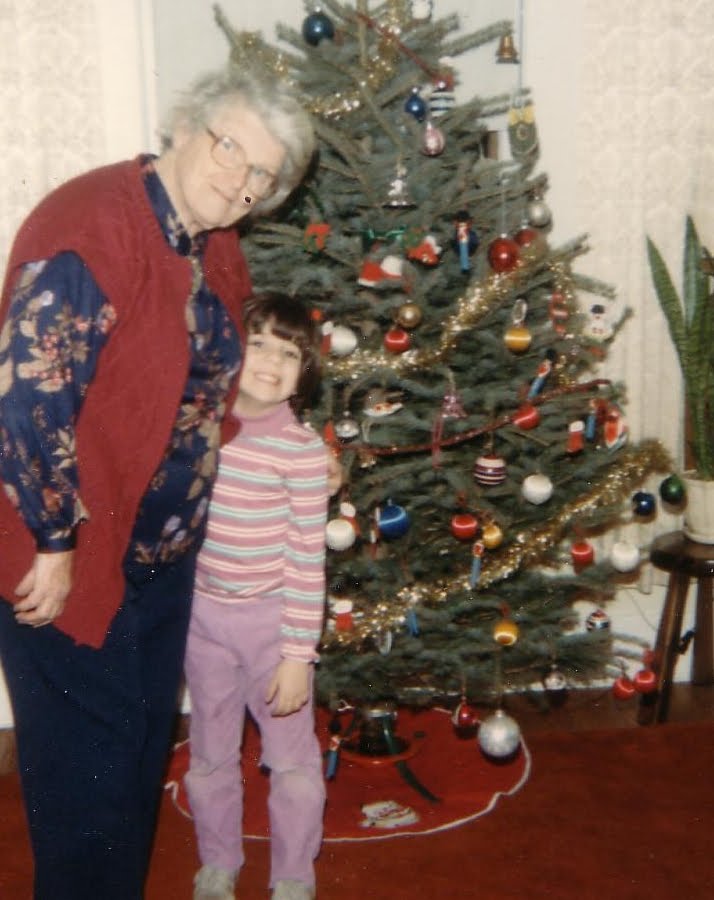
In lieu of a sound clip, I will include a photo of myself and one of my favorite saints.

For a jaded old church nerd like me, it takes something special to move me (for instance, it's rare that the Agnus Dei lights my fire). Certain liturgical elements, thanks to their rarity, catch my attention (I'm a sucker for a good Sequence) and a litany is one of them. This weekend we sang Becker's popular setting of the litany. As we invoked saint after saint, while the newest members of the presbyterate lay prostrate, I became unexpectedly emotional.
The assembly repeated "pray for us" as we called upon saints familiar (Mary & Joseph), arcane (Chrysogonus & Hippolytus) and particular to our Jesuit community (Ignatius & Francis). On other occasions I have sung litanies that put Oscar Romero, Dorothy Day and Pedro Arrupe alongside Linus, Cletus and Clement. Where do we get the confidence to call upon our heroes to petition God on our behalf?
Any Catholic concerned with public perception keeps all this saints hoo-ha quiet if they can. Maybe we hedge a bit, acknowledging that we admire these people, but leaving out the more radical part of our claim to the saints: we believe there is something so generous and holy about them that they will back up our prayers.
As we asked for prayers on Saturday, what really took my breath away was the list we had in front of us, one that only skims the surface of our wealth of heavenly intercessors. And even when we mumble our response, or can't hear the cantor, or let our eyes and minds wander, the saints are still on our side, welcoming us into their communion. What greater advocates can we have than the saints named and unnamed, living in love with God forever?
[Two notes on the litany - I tried to find a recording of the Becker setting to which to link, but I was unable to find one that wasn't either out of tune, goopily sentimental, or one singer overdubbing his own responses to the invocations. Also, after the ordination I said something flippant about not knowing why a piece of music that is mildly cheesy was so moving. Luckily I was with the Jesuits, one of whom had a characteristic reply enumerating all of the evidence for this being the superior setting of the litany. Typical]
In lieu of a sound clip, I will include a photo of myself and one of my favorite saints.
Monday, May 31, 2010
Hope does not disappoint
If I were more serious about blogging, I would look ahead to the week’s readings and write about them before we hear them, but as it is I tend to hear them, be inspired, and take a few days to mull them over, ending up about 48 hours behind the lectionary when I decide to comment on it.
Yesterday was Trinity Sunday. This feast always sneaks up on me, possibly because it comes in the shadow of Pentecost. It celebrates one of my favorite theological ideas: that God is dynamic, mysterious, varied and engaged with us in every possible way. I cannot imagine being satisfied with a lesser God.
The second reading for the Solemnity was from Romans, containing Paul’s famous statement we even boast of our afflictions, knowing that affliction produces endurance, and endurance, proven character, and proven character, hope, and hope does not disappoint, because the love of God has been poured out into our hearts through the Holy Spirit that has been given to us.
Some people look at that and see only danger, the danger that comes when people manipulate scripture to use it to keep people down. Yes, people have looked to that as an excuse to afflict and to keep the afflicted in their place. But when I heard it proclaimed this weekend my ear was drawn not to the beginning of the statement but to the end, that hope does not disappoint.
I have become well acquainted with hope in recent years. I rarely hope in a particular object or outcome – those indeed disappoint, and often. But I have settled into a hope that believes all will be well, that the worst of our lives are not the final word, and that there are myriad resurrections possible thanks to a God who died and rose.
For me, this is not pie in the sky stuff: My most intense experiences of hope have come in experiences of honestly accepting a grievous reality. Knowing that life can be tragic and still believing that life can be good has produced a new strength in me. This hope is not eagerness or anticipation - more a conviction that goodness and love are our ends. Like any virtue this hope is tested and surely will continue to be, but now it helps me face the day-to-day with a different attitude toward the bad. There are plenty of things that disappoint me, but hope has yet to be one of them.
Yesterday was Trinity Sunday. This feast always sneaks up on me, possibly because it comes in the shadow of Pentecost. It celebrates one of my favorite theological ideas: that God is dynamic, mysterious, varied and engaged with us in every possible way. I cannot imagine being satisfied with a lesser God.
The second reading for the Solemnity was from Romans, containing Paul’s famous statement we even boast of our afflictions, knowing that affliction produces endurance, and endurance, proven character, and proven character, hope, and hope does not disappoint, because the love of God has been poured out into our hearts through the Holy Spirit that has been given to us.
Some people look at that and see only danger, the danger that comes when people manipulate scripture to use it to keep people down. Yes, people have looked to that as an excuse to afflict and to keep the afflicted in their place. But when I heard it proclaimed this weekend my ear was drawn not to the beginning of the statement but to the end, that hope does not disappoint.
I have become well acquainted with hope in recent years. I rarely hope in a particular object or outcome – those indeed disappoint, and often. But I have settled into a hope that believes all will be well, that the worst of our lives are not the final word, and that there are myriad resurrections possible thanks to a God who died and rose.
For me, this is not pie in the sky stuff: My most intense experiences of hope have come in experiences of honestly accepting a grievous reality. Knowing that life can be tragic and still believing that life can be good has produced a new strength in me. This hope is not eagerness or anticipation - more a conviction that goodness and love are our ends. Like any virtue this hope is tested and surely will continue to be, but now it helps me face the day-to-day with a different attitude toward the bad. There are plenty of things that disappoint me, but hope has yet to be one of them.
Sunday, March 7, 2010
It goes without saying that I like to express myself. I hear a sarcastic “tell us what you really think” a few times a week, and try to take it as a compliment rather than taking it in the spirit it is given. As the years have gone by and I’ve become less invested in getting my own way all the time, I’ve developed a habit that, like many of my habits, can be a little off-putting. If I’m involved in a discussion or situation in which my voice is the minority, I still say my piece knowing that the outcome of the discussion is probably not going to go my way. I feel better knowing that I haven’t kept my dissent secret from anyone, and I can go on my way ready to live with whatever outcome results. I think there is virtue in sharing what little wisdom I may have to offer, and I think that the conversation is more important than the outcomes.
Last night I had dinner with some friends with whom I can talk about anything, from work to music to vocation to tea, and over the course of our long chat last night the conversation turned to prayer. All three of us have degrees in theology, which sometimes makes it harder to talk about these topics – every comment about prayer has a million theological implications, and we waffle between tossing around terms with ease and being awe-struck and humbled by the act of trying to define that which cannot be defined.
We were talking about petitionary prayer, a subject I find particularly difficult for theology-folk to talk about. To the more snobbish among us it seems so juvenile, so lower-stages-of-moral-development. And to the realists among us it seems fairly unproductive: we ask for what we want, and God’s will sweeps forward on its path regardless.
Is the answer then not to offer our needs and wants to God in prayer? I don’t think so. If I believe it is worthwhile to share my wants and ideas with other people, regardless of the outcome, how much more worthwhile is it to share those with God, even if God’s will may not match our dreams and imaginings? Every time we share a piece of who we are, what we want, or what we believe, we deepen the intimacy between us and God. There is value in that, in the honesty needed to share ourselves, and in the communion that can only develop in the shadow of that honesty.
Last night I had dinner with some friends with whom I can talk about anything, from work to music to vocation to tea, and over the course of our long chat last night the conversation turned to prayer. All three of us have degrees in theology, which sometimes makes it harder to talk about these topics – every comment about prayer has a million theological implications, and we waffle between tossing around terms with ease and being awe-struck and humbled by the act of trying to define that which cannot be defined.
We were talking about petitionary prayer, a subject I find particularly difficult for theology-folk to talk about. To the more snobbish among us it seems so juvenile, so lower-stages-of-moral-development. And to the realists among us it seems fairly unproductive: we ask for what we want, and God’s will sweeps forward on its path regardless.
Is the answer then not to offer our needs and wants to God in prayer? I don’t think so. If I believe it is worthwhile to share my wants and ideas with other people, regardless of the outcome, how much more worthwhile is it to share those with God, even if God’s will may not match our dreams and imaginings? Every time we share a piece of who we are, what we want, or what we believe, we deepen the intimacy between us and God. There is value in that, in the honesty needed to share ourselves, and in the communion that can only develop in the shadow of that honesty.
Tuesday, March 24, 2009
Study Break!
I'm putting the finishing touches on a paper that was due yesterday and hope to be done and out of the library by 8pm (this is an exegesis on Mark 5: 24b-34 for those of you keeping track of my scholarly pursuits). The older I get, the simpler my editorial technique becomes: my work today was to use fewer words.
I love words. I love run-on sentences and convoluted clauses. My style usually runs toward "why use one word when you can use ten". Unfortunately that often makes my writing incomprehensible, a problem that is particularly nagging in my academic writing. So today, I purge the paper.
As an aside, DORK ALERT: I can't find one of the seminal commentaries on the Gospel of Mark in English translation (it's originally German) so I'm reading it in Italian.
I love words. I love run-on sentences and convoluted clauses. My style usually runs toward "why use one word when you can use ten". Unfortunately that often makes my writing incomprehensible, a problem that is particularly nagging in my academic writing. So today, I purge the paper.
As an aside, DORK ALERT: I can't find one of the seminal commentaries on the Gospel of Mark in English translation (it's originally German) so I'm reading it in Italian.
Wednesday, January 14, 2009
My double life, part 2
I wish I could say that my posting hiatus is due to making good on my resolution, and that I have been so busy seeing friends that I haven't posted, but that is not the case.
In about ten days my two year term as President of BOC ends, and I have been spending a lot of time working on the transition. I was asked to stay on the Leadership Team as the Public Relations Chair, and PR preparations for our upcoming show (Alcina, February 12-15!) have had me very busy.
My email inbox is bustling with emails about ticket sales, coupon codes, press releases, program ads, etc. Amid the flood of emails this morning I found one that made me sigh a little bit with longing: Call for Submissions: Journal of Inter-Religious Dialogue.
Yes, I am odd for being so moved by that. But occasionally I think about what my life would be like if I didn't sing, if I hadn't had to choose a lifestyle that gives me the freedom to take gigs and lessons and be a part of the artistic culture. I would probably have a PhD in Theology, maybe Scripture in particular. I would have spent years in the library: writing, researching, learning. I love the world of academia, and I surely still have a foot there, but there are a lot of 'worlds' I dabble in, and I'm running out of feet.
I know that lifestyle would be just as taxing as any other, but one thing that makes it really attractive: You don't have to exhaust yourself tiptoeing around the feelings of oversensitive sopranos when it's just you and the New Testament Abstracts.
My third love, besides theology and singing: Municipal government. Commentary on the State of the City to follow!
In about ten days my two year term as President of BOC ends, and I have been spending a lot of time working on the transition. I was asked to stay on the Leadership Team as the Public Relations Chair, and PR preparations for our upcoming show (Alcina, February 12-15!) have had me very busy.
My email inbox is bustling with emails about ticket sales, coupon codes, press releases, program ads, etc. Amid the flood of emails this morning I found one that made me sigh a little bit with longing: Call for Submissions: Journal of Inter-Religious Dialogue.
Yes, I am odd for being so moved by that. But occasionally I think about what my life would be like if I didn't sing, if I hadn't had to choose a lifestyle that gives me the freedom to take gigs and lessons and be a part of the artistic culture. I would probably have a PhD in Theology, maybe Scripture in particular. I would have spent years in the library: writing, researching, learning. I love the world of academia, and I surely still have a foot there, but there are a lot of 'worlds' I dabble in, and I'm running out of feet.
I know that lifestyle would be just as taxing as any other, but one thing that makes it really attractive: You don't have to exhaust yourself tiptoeing around the feelings of oversensitive sopranos when it's just you and the New Testament Abstracts.
My third love, besides theology and singing: Municipal government. Commentary on the State of the City to follow!
Tuesday, November 18, 2008
Gifts
In case any of you worry that I don't have anyone looking out for me in Boston, you should know that last night my landlady knocked on my door around 6pm holding two boxes. She told me she had gone through her jewelry and found a few things she never wore and wanted to give them to me because she felt bad about the burglary and wanted to help me start refilling my jewelry box. A coworker of mine had also gotten me a few bracelets when she heard that mine had been taken.
I envy those people who can just accept gifts without a second thought. I think for most of us (and especially for the particularly neurotic, like myself) there's always that tiny feeling of unworthiness, even guilt, that someone should think of you and offer you something you haven't earned.
Her visit last night reminded me of a gift she gave me when I first moved in. I had made the mistake of moving while I was in the middle of a two-week intensive summer course on The Church of the Poor with none other than Gustavo Gutierrez (SQUEE!). When she came down with a gift for me while I was writing my final paper in my haphazardly decorated new kitchen, it made such an impact on me that I included the incident in my paper. This is what I wrote at the time:
Related to our need to be open to receiving God’s assistance is our need to accept God’s gratuitous gift. Discussing the preferential option for the poor and spiritual poverty, Gutiérrez states “God first loved us. Our lives should respond to this gratuitous initiative of God” (EW 146). God loves us – and all humans – because God is good, not because we are good.
To accept gifts freely can be a challenge. As I was writing this, my landlady unexpectedly knocked on my door. I opened the door to find her bearing two sets of curtains. She told me her daughter had left them with her, they matched my kitchen, I had two kitchen windows, and I didn’t have curtains yet, so she was giving them to me. Her action was so unexpected that my thank-yous felt inadequate, and I shut the door unsettled. If it is difficult to accept free curtains, no wonder it is a challenge to accept divine love and the gift of eternal life.
But I don’t physically need curtains any more than poor Andean girls need dolls, or an adolescent Gustavo needed ice cream, or Jesus needed three hundred denarii of oil poured on his head. Yet in the Markan account of Jesus anointing by an anonymous woman (Mk 14: 3-9) Jesus chastises those who would criticize her gratuitous act. In fact, he links the proclamation of the gospel with her act.
To receive God’s love gratuitously and to know that love is not conditional upon our striving, is an act of submission, of giving up control. We find validation of this acceptance in the pericope of Jesus’ anointing, and also in the story of Creation. According to Gutiérrez, we were made in gratuity, and “to be loved gratuitously is the greatest human aspiration”.
Forgive this soprano's detour into her other life of preaching and pontificating. Can't hurt to be reminded of the free gift of love once in a while, though.
I envy those people who can just accept gifts without a second thought. I think for most of us (and especially for the particularly neurotic, like myself) there's always that tiny feeling of unworthiness, even guilt, that someone should think of you and offer you something you haven't earned.
Her visit last night reminded me of a gift she gave me when I first moved in. I had made the mistake of moving while I was in the middle of a two-week intensive summer course on The Church of the Poor with none other than Gustavo Gutierrez (SQUEE!). When she came down with a gift for me while I was writing my final paper in my haphazardly decorated new kitchen, it made such an impact on me that I included the incident in my paper. This is what I wrote at the time:
Related to our need to be open to receiving God’s assistance is our need to accept God’s gratuitous gift. Discussing the preferential option for the poor and spiritual poverty, Gutiérrez states “God first loved us. Our lives should respond to this gratuitous initiative of God” (EW 146). God loves us – and all humans – because God is good, not because we are good.
To accept gifts freely can be a challenge. As I was writing this, my landlady unexpectedly knocked on my door. I opened the door to find her bearing two sets of curtains. She told me her daughter had left them with her, they matched my kitchen, I had two kitchen windows, and I didn’t have curtains yet, so she was giving them to me. Her action was so unexpected that my thank-yous felt inadequate, and I shut the door unsettled. If it is difficult to accept free curtains, no wonder it is a challenge to accept divine love and the gift of eternal life.
But I don’t physically need curtains any more than poor Andean girls need dolls, or an adolescent Gustavo needed ice cream, or Jesus needed three hundred denarii of oil poured on his head. Yet in the Markan account of Jesus anointing by an anonymous woman (Mk 14: 3-9) Jesus chastises those who would criticize her gratuitous act. In fact, he links the proclamation of the gospel with her act.
To receive God’s love gratuitously and to know that love is not conditional upon our striving, is an act of submission, of giving up control. We find validation of this acceptance in the pericope of Jesus’ anointing, and also in the story of Creation. According to Gutiérrez, we were made in gratuity, and “to be loved gratuitously is the greatest human aspiration”.
Forgive this soprano's detour into her other life of preaching and pontificating. Can't hurt to be reminded of the free gift of love once in a while, though.
Subscribe to:
Posts (Atom)