Something awful happened today.
The shooting of Congresswoman Giffords is a specific, personal tragedy, and I don't want to distract from it's specificity by making her a symbol. Yet we can't deny the country was shocked into awareness today, and many of us are thinking about the consequences of mean-spiritedness.
I think a lot about mean-spiritedness in my own religious context. Sometimes I wonder if anyone can be quite as mean as Catholics can be. So many of my fellow Catholics have bought the current politicial us-vs-them mentality hook, line and sinker. They are embattled, in the fortress, sole and indispensible defenders of the Body of Christ. If they do not keep the unworthy from the community, no one will! I don't have the heart for that sort of combat, and I have the historical perspective to know it's not up to me to decide who is in and who is out.
That's where my head was when I got to mass this afternoon. The first thing I did with the organist was run the psalm - "The Lord will bless his people with peace". It was almost laughable in light of the heartwrenching afternoon. The Lord will bless us with peace - will we have it?
The first reading announced a favored one of God who "shall bring forth justice to the nations, not crying out, not shouting, not making his voice heard in the street." How often do we who cry out think we are being prophetic when we are really just being loud? The 'soldiers in the army of Christ' who profess a Church militant, who want to root out those who are unworthy of the faith - they may be as misguided as those who expected a zealous and violent Messiah.
God confounds us, and rather than drawing the boundaries we would like upon the Chosen People, God opens wide the doors and does what we least expect.
Fast-forward to the second reading. "In truth, I see that God shows no partiality. Rather, in every nation whoever fears him and acts uprightly is acceptable to him." Remember, this is Peter talking - not exactly one for welcoming the stranger and opening wide the doors. If a primary theme of Acts is the demarcation of boundaries, its ultimate conclusion is that the net Christ cast was much wider than initially imagined. However you want to put it: "All God's critters got a place in the choir" or "Here comes everybody", the message is clear. Those who fear God and act justly are acceptable.
And then the familiar Gospel reading, with it's beautiful climax: "he saw the Spirit of God descending like a dove and coming upon him. And a voice came from the heavens, saying, 'This is my beloved Son, with whom I am well pleased.'" That's what I expected to blog about when I woke up this morning, how we need to listen to the voices that tell us we are pleasing, and listen for God's voice among them. After I was shocked by violence today, the Scripture did its marvelous work of meeting me where I am. The voice did not whisper to only a few. God's voice thundered to all.
I give a lot of thought to ecclesiology, enough to know that no religion exists without some sort of boundaries. How much damage do we do when we draw the lines too violently, when we presume the worst of people and don't act with charity?
As we prepared our altar to participate in Christ's sacrifice and the Church's feast, we sang "They'll know we are Christians by our love". Love is not pompous, nor rude, nor self-interested. I have to work as hard as anyone to live the love that Paul describes in 1 Cor 13. I know there are people who claim to be acting out of "tough love" when they harangue Christians who don't meet their expectations. Sorry folks, but I have to call shenanigans on that. I know what charity looks like, and vitriolic criticism it ain't.
It's not good for any of us to live in a constant state of defensiveness, ready to throw a punch at anyone who endangers our Church (or our country, or our paradigm, or...). I for one am ready to relax, to let my guard down against a Them who may not even exist, and trust that God can take care of us, of the Church, and even of God's self.
Showing posts with label religion. Show all posts
Showing posts with label religion. Show all posts
Saturday, January 8, 2011


Monday, December 20, 2010
My other church
I received an unexpected blessing a few weeks ago. It took the form of an email stating "the campus ministers have decided there will be no 9 pm mass on December 19". I conduct and worship with a collegiate musical ensemble every Sunday at an hour that to me seems impossibly late. I've written before about how they inspire me, and the assembly with whom we worship has become an important part of my spiritual life.
Still, for someone who works early Monday mornings, a standing Sunday night gig can be a drag. I was not-so-secretly happy to squeeze one more week out of winter break. Ever busy, I had two other church gigs in my neighborhood this weekend. After last night's 6 pm mass I dashed home, got changed, and drove to the apartment of two newlywed friends who are also hosting another couple at whose wedding I sang and who now live in Germany.
We briefly did the basic "catching up" small talk and then conversation plowed right into education: Jesuit schools, charter schools, diocesan schools, rigor, standards, you name it. As the part moved from the living room to the dinner table we talked about the homilies we'd heard at our parishes that weekend, about how parishes (and their liturgies) feed people (or don't). The Dream Act, Vatican II, the SSPX, a train station in Stuttgart - nothing was outside our purview. We agreed and disagreed, challenged, supported and edified each other. And I thought "here is my other church".
I hold the sacramental life of the Church in a place of highest honor. It is the Church's public prayer made up of particular actions that give us grace. But I can only be as positive as I am about the communal prayer of the Church - its liturgy - because I have experience of church that is intimate, local, and relational.
People often roll their eyes at my devotion, because "the Church" does this or that that they - and maybe even I - don't like. In my heart the Church is not just a series of pronouncements or dogma or the College of Cardinals. My Church has always been my people: my family, my parish, my school, my work, my diocese.
If you don't 'get' community, I don't see how you could 'get' Church, or liturgy. Two nights ago with another group of friends - not from my Catholic circles and not monolithically religious - a dear friend looked around at everyone hollering and laughing in one couples' basement and whispered to me "this is magical". Magical it was. A group of people who a few years prior were strangers are now like family. This is my other church.
I come across people who want to get the Church out of the modern world. Let us go back into the fortress, drape the nuns in black habits, cover the women's heads and put back the altar rail to guard the table from the faithful. Let's bring the Church back to a different era (one we have arbitrarily chosen as 'the most Catholic' - give us the 19th century with indoor plumbing). While we're at it, let's make sure we know who's in and who's out . There are "real" - pure, elect - members of the Body of Christ, and then there's everyone else.
The people on that side of the culture war shout the loudest because they know they have lost. The world has turned and they are still in the past. I don't want an anachronistic Church, frozen in time. I like my Church in the here and now, around all the tables of my life. I recognize the current of grace in which I swim because of real people and relationships. No old-fashioned fantasy can compete with the living, breathing sanctity of my community drawn together by the Spirit of love.
Still, for someone who works early Monday mornings, a standing Sunday night gig can be a drag. I was not-so-secretly happy to squeeze one more week out of winter break. Ever busy, I had two other church gigs in my neighborhood this weekend. After last night's 6 pm mass I dashed home, got changed, and drove to the apartment of two newlywed friends who are also hosting another couple at whose wedding I sang and who now live in Germany.
We briefly did the basic "catching up" small talk and then conversation plowed right into education: Jesuit schools, charter schools, diocesan schools, rigor, standards, you name it. As the part moved from the living room to the dinner table we talked about the homilies we'd heard at our parishes that weekend, about how parishes (and their liturgies) feed people (or don't). The Dream Act, Vatican II, the SSPX, a train station in Stuttgart - nothing was outside our purview. We agreed and disagreed, challenged, supported and edified each other. And I thought "here is my other church".
I hold the sacramental life of the Church in a place of highest honor. It is the Church's public prayer made up of particular actions that give us grace. But I can only be as positive as I am about the communal prayer of the Church - its liturgy - because I have experience of church that is intimate, local, and relational.
People often roll their eyes at my devotion, because "the Church" does this or that that they - and maybe even I - don't like. In my heart the Church is not just a series of pronouncements or dogma or the College of Cardinals. My Church has always been my people: my family, my parish, my school, my work, my diocese.
If you don't 'get' community, I don't see how you could 'get' Church, or liturgy. Two nights ago with another group of friends - not from my Catholic circles and not monolithically religious - a dear friend looked around at everyone hollering and laughing in one couples' basement and whispered to me "this is magical". Magical it was. A group of people who a few years prior were strangers are now like family. This is my other church.
I come across people who want to get the Church out of the modern world. Let us go back into the fortress, drape the nuns in black habits, cover the women's heads and put back the altar rail to guard the table from the faithful. Let's bring the Church back to a different era (one we have arbitrarily chosen as 'the most Catholic' - give us the 19th century with indoor plumbing). While we're at it, let's make sure we know who's in and who's out . There are "real" - pure, elect - members of the Body of Christ, and then there's everyone else.
The people on that side of the culture war shout the loudest because they know they have lost. The world has turned and they are still in the past. I don't want an anachronistic Church, frozen in time. I like my Church in the here and now, around all the tables of my life. I recognize the current of grace in which I swim because of real people and relationships. No old-fashioned fantasy can compete with the living, breathing sanctity of my community drawn together by the Spirit of love.
Tuesday, December 14, 2010
Celebrating Christmas
One of the habits I nag my choirs about is singing too much consonant and not enough vowel on any particular word. It’s especially noticeable on words with the “s” sound: one song includes the phrase “this time” repeated on eighth notes, and results in a sputtering hiss upon which even my most sophisticated singers cannot improve.
I faced this challenge from the other side of the conductor’s podium this past weekend, when I had to try to make art out of singing the word “Christmas” over and over. At a certain point I admitted defeat, all the while wondering why I had never before noticed that this word gave choirs so much trouble.
Then I remembered that I conduct liturgical choirs, and we don’t sing about Christmas.
Now, before you get all “war on Christmas”, hear me out. I don’t celebrate Christmas. I celebrate the Nativity of the Lord, the Incarnation, the awesome generosity of a God who became human just like me. I celebrate these realities in the context of a larger year of grace that over the course of a turn of the earth tells the whole wonderful story of our salvation and looks forward to the salvation to come. I try to celebrate these things every day, and the liturgical calendar has given me special days to celebrate them, just in case I forget any part of the story.
When people huff and puff about people forgetting “the meaning of Christmas”, I have to laugh. There are plenty of people who celebrate Christmas by celebrating the celebration. It’s not a commemoration but a celebration, and that’s just how they like it. They didn’t forget anything, and our reminding them is not going to change them any more than their ignoring the origins of the feast would change my observance of the feast.
I sing songs that worship Christmas instead of Christ because it’s gig, and I frankly can’t see much harm in it. I am in the midst of celebrating Advent right now while half of the country is celebrating Christmas. If I could magically force them to wait until December 25th, would that make their celebration the same as my commemoration? We’re not celebrating the same thing.
This post sounds more “us vs. them” than I want to be, because in truth the line between us and them runs through every human heart. But I wish the people who try to fight the war on Christmas would accept that it has already been lost. The holiday has been transformed, and we are left to keep our Christmas as it suits us. We can be aggravated that the word was appropriated, but that is a bell that can’t be unrung. There are two Christmases now.
With every year that goes by I become a little more complacent, but I still maintain my subversive core. At this time of year, it doesn’t yearn to remind everyone that Christmas is about Jesus, or harangue consumers. But it thrills a little to know that I am keeping my Advent and Christmas seasons in my heart and in my faith community, even if the media and the world is suggesting something different. We can keep the traditions and hope that people will join us.
God so loved the world… Nothing anyone can do or say or know or forget or struggle with or insist upon can negate that or improve upon it. All I can do is create small spaces of grace where God can come again. Where meek souls will receive him still, the dear Christ enters in.
I faced this challenge from the other side of the conductor’s podium this past weekend, when I had to try to make art out of singing the word “Christmas” over and over. At a certain point I admitted defeat, all the while wondering why I had never before noticed that this word gave choirs so much trouble.
Then I remembered that I conduct liturgical choirs, and we don’t sing about Christmas.
Now, before you get all “war on Christmas”, hear me out. I don’t celebrate Christmas. I celebrate the Nativity of the Lord, the Incarnation, the awesome generosity of a God who became human just like me. I celebrate these realities in the context of a larger year of grace that over the course of a turn of the earth tells the whole wonderful story of our salvation and looks forward to the salvation to come. I try to celebrate these things every day, and the liturgical calendar has given me special days to celebrate them, just in case I forget any part of the story.
When people huff and puff about people forgetting “the meaning of Christmas”, I have to laugh. There are plenty of people who celebrate Christmas by celebrating the celebration. It’s not a commemoration but a celebration, and that’s just how they like it. They didn’t forget anything, and our reminding them is not going to change them any more than their ignoring the origins of the feast would change my observance of the feast.
I sing songs that worship Christmas instead of Christ because it’s gig, and I frankly can’t see much harm in it. I am in the midst of celebrating Advent right now while half of the country is celebrating Christmas. If I could magically force them to wait until December 25th, would that make their celebration the same as my commemoration? We’re not celebrating the same thing.
This post sounds more “us vs. them” than I want to be, because in truth the line between us and them runs through every human heart. But I wish the people who try to fight the war on Christmas would accept that it has already been lost. The holiday has been transformed, and we are left to keep our Christmas as it suits us. We can be aggravated that the word was appropriated, but that is a bell that can’t be unrung. There are two Christmases now.
With every year that goes by I become a little more complacent, but I still maintain my subversive core. At this time of year, it doesn’t yearn to remind everyone that Christmas is about Jesus, or harangue consumers. But it thrills a little to know that I am keeping my Advent and Christmas seasons in my heart and in my faith community, even if the media and the world is suggesting something different. We can keep the traditions and hope that people will join us.
God so loved the world… Nothing anyone can do or say or know or forget or struggle with or insist upon can negate that or improve upon it. All I can do is create small spaces of grace where God can come again. Where meek souls will receive him still, the dear Christ enters in.
Sunday, November 14, 2010
Retroactive indignance
A dear friend who works in politics once admitted he occasionally tells people he is a social security actuary in order to avoid the ridiculous political comments people make when he reveals his true line of work. I have considered doing the same thing at times, because when I tell people I teach Church History - or even that I am committed to the Church - I get negative responses ranging from disbelief to horror, from an implied “But you seemed so normal!” to a sputtering “But- but- but - WHAT ABOUT THE CRUSADES??”
Uh, they were bad?
Seriously, I get the Crusades question a lot, almost as often as I get invasive lines of questioning about my take on sexual ethics, a field in which I have no academic background, no professional purview, and which is the topic of another post entirely. Either way there are a lot of assumptions made right off the bat, and as often as not a visible disapproval of my line of work This disapproval frequently manifests as a list of wrongs committed throughout history. Clearly, my interlocutors would have handled things differently.
Of course they would have, because they were born in the 20th century in America, they’re mostly middle-class, mostly well-educated, swimming in the postmodern current like all the rest of us. So I find their retroactive indignance alternately annoying and amusing. It’s almost childlike the way they imagine time-travel, that they could plop themselves down in the driver’s seat 1000 years ago.
There’s always a context. There’s always a culture. There’s always a why. Even our famed “religious wars” (which I frequently remind my students, had little to do with doctrine and a lot to do with “stuff”) was partially prompted by the fact that there were bored knights running all over the empire getting in fights, and Pope Urban thought to himself “I have a way to get them all far away from here…”
We laugh at the 19th century Popes clinging to temporal power (because to our 21st century minds that’s not what a Pope is ‘supposed to do’), but you can’t understand that without understanding the rest of the story. Pius IX acted the way he did because Constantine moved the capital of the Empire in the 300s…because Leo the Great met Attila the Hun in the 400s…because Pepin the Short foresaw a prudent alliance in the 700s… With our 21st century minds sometimes we just don’t get it, and it’s ok to admit that.
I’m not advocating a retroactive indifference either - we should look at history with a critical eye, with dismay or admiration or even horror. But to be smug about decisions made centuries ago is silly. For how will history judge our own era of ‘tolerance’ and ‘prosperity’ and ‘peace’? When in the year 2500 someone judges our social sins of action and inaction will they interpret it in light of our world, or will they immediately condemn us?
There is so much progress still to be made in our world, and I admire those prophetic voices who insist the change must come immediately and without delay. But in my heart I’m not convinced we can change the outcomes without changing the context. When I think of the issues that distress me the most - particularly issues of gender, both in and out of the Church - the great sadness for me is not that I can’t have my way. I mourn that the world is not with me in my desire. I don’t just want the outcome, I want the world to be ready for it, I want the world to want it too.
We will get there, but it takes time. If the study of history has taught me anything it’s that it takes a long time to turn around a big boat. When I started studying Popes I never thought it would make me more patient, but there you have it.
Uh, they were bad?
Seriously, I get the Crusades question a lot, almost as often as I get invasive lines of questioning about my take on sexual ethics, a field in which I have no academic background, no professional purview, and which is the topic of another post entirely. Either way there are a lot of assumptions made right off the bat, and as often as not a visible disapproval of my line of work This disapproval frequently manifests as a list of wrongs committed throughout history. Clearly, my interlocutors would have handled things differently.
Of course they would have, because they were born in the 20th century in America, they’re mostly middle-class, mostly well-educated, swimming in the postmodern current like all the rest of us. So I find their retroactive indignance alternately annoying and amusing. It’s almost childlike the way they imagine time-travel, that they could plop themselves down in the driver’s seat 1000 years ago.
There’s always a context. There’s always a culture. There’s always a why. Even our famed “religious wars” (which I frequently remind my students, had little to do with doctrine and a lot to do with “stuff”) was partially prompted by the fact that there were bored knights running all over the empire getting in fights, and Pope Urban thought to himself “I have a way to get them all far away from here…”
We laugh at the 19th century Popes clinging to temporal power (because to our 21st century minds that’s not what a Pope is ‘supposed to do’), but you can’t understand that without understanding the rest of the story. Pius IX acted the way he did because Constantine moved the capital of the Empire in the 300s…because Leo the Great met Attila the Hun in the 400s…because Pepin the Short foresaw a prudent alliance in the 700s… With our 21st century minds sometimes we just don’t get it, and it’s ok to admit that.
I’m not advocating a retroactive indifference either - we should look at history with a critical eye, with dismay or admiration or even horror. But to be smug about decisions made centuries ago is silly. For how will history judge our own era of ‘tolerance’ and ‘prosperity’ and ‘peace’? When in the year 2500 someone judges our social sins of action and inaction will they interpret it in light of our world, or will they immediately condemn us?
There is so much progress still to be made in our world, and I admire those prophetic voices who insist the change must come immediately and without delay. But in my heart I’m not convinced we can change the outcomes without changing the context. When I think of the issues that distress me the most - particularly issues of gender, both in and out of the Church - the great sadness for me is not that I can’t have my way. I mourn that the world is not with me in my desire. I don’t just want the outcome, I want the world to be ready for it, I want the world to want it too.
We will get there, but it takes time. If the study of history has taught me anything it’s that it takes a long time to turn around a big boat. When I started studying Popes I never thought it would make me more patient, but there you have it.
Tuesday, October 5, 2010
I contain multitudes
I'm a vegetarian with glue traps in her kitchen.
I'm sure Walt Whitman won't mind me stealing his line to add "I contain multitudes".
The best answer to this mouse problem is the decidedly inhumane sticky trap. I'm not thrilled about it, but it's what I have to do and it doesn't totally offend my morals. So when the exterminator put down the traps, I didn't complain.
But as a vegetarian, isn't that something that "people like me" don't do? That supposition is one major reason I don't talk about my food choice: I don't need anyone making assumptions or judgments. Because I self-identify with a number of groups, I fall prey to those assumptions all the time. Certain things are expected from "that" group, whatever "that" may be.
When I was a teenager I spend a lot of time trying to be a variety of "that"s, using an image as my guide and basing my choices on whatever image I aspired to at the time: rebel, punk, social radical, even that most elusive of all images - normal.
Eventually I got sick of my rebellion always getting me in trouble, I discovered I don't have the stomach for radical poverty, and I spend enough time with people to discover there is no normal. That's when the hard work began: getting to know myself well enough that being me could be my ideal. The behaviors I ruled out weren't avoided because they didn't fit my image, but because they didn't match my integrity. The statement changed from "I'm not that kind of person" to "that's not me".
To be sure, there's a place for "that kind of person" in our choices. Kids don't lie because we teach them not to look up to liars. Catholics avoid meat on Fridays in Lent because "that's what Catholics do". And sometimes I put down a leather item in the shoe store because "I'm not that kind of person" (and frankly the dirty looks aren't worth it).
We can do better than that. A person is much more likely to follow their conviction if they truly believe that a lie is a betrayal of the credulousness of another person, and not just another thing on the list of actions "we don't do". Still I won't begrudge someone not lying "just because" - or even only because they over heard one of my "there's nothing I hate more than a filthy liar" speeches.
Occasionally one of more outrageous comments or actions will earn the shocked response "but you're a religion teacher!" as if that vocation came alongside a basket of other qualities that society has deemed appropriate for good Christian ladies. My goal is never to scandalize, but I know from experience how painful it is to try to fit into a mold and I'm not going to do it, no matter how pious the mold.
Instead, I mold myself according to my conscience, prayer, and the guidance of my community. Chances are the person I become won't fit one of the world's molds. I trust that somewhere there is a me-shaped-mold, with just the right fit for a loud-laughing Catholic, a left-brained artist, a complacent rebel, a mouse-killing vegetarian.
I'm sure Walt Whitman won't mind me stealing his line to add "I contain multitudes".
The best answer to this mouse problem is the decidedly inhumane sticky trap. I'm not thrilled about it, but it's what I have to do and it doesn't totally offend my morals. So when the exterminator put down the traps, I didn't complain.
But as a vegetarian, isn't that something that "people like me" don't do? That supposition is one major reason I don't talk about my food choice: I don't need anyone making assumptions or judgments. Because I self-identify with a number of groups, I fall prey to those assumptions all the time. Certain things are expected from "that" group, whatever "that" may be.
When I was a teenager I spend a lot of time trying to be a variety of "that"s, using an image as my guide and basing my choices on whatever image I aspired to at the time: rebel, punk, social radical, even that most elusive of all images - normal.
Eventually I got sick of my rebellion always getting me in trouble, I discovered I don't have the stomach for radical poverty, and I spend enough time with people to discover there is no normal. That's when the hard work began: getting to know myself well enough that being me could be my ideal. The behaviors I ruled out weren't avoided because they didn't fit my image, but because they didn't match my integrity. The statement changed from "I'm not that kind of person" to "that's not me".
To be sure, there's a place for "that kind of person" in our choices. Kids don't lie because we teach them not to look up to liars. Catholics avoid meat on Fridays in Lent because "that's what Catholics do". And sometimes I put down a leather item in the shoe store because "I'm not that kind of person" (and frankly the dirty looks aren't worth it).
We can do better than that. A person is much more likely to follow their conviction if they truly believe that a lie is a betrayal of the credulousness of another person, and not just another thing on the list of actions "we don't do". Still I won't begrudge someone not lying "just because" - or even only because they over heard one of my "there's nothing I hate more than a filthy liar" speeches.
Occasionally one of more outrageous comments or actions will earn the shocked response "but you're a religion teacher!" as if that vocation came alongside a basket of other qualities that society has deemed appropriate for good Christian ladies. My goal is never to scandalize, but I know from experience how painful it is to try to fit into a mold and I'm not going to do it, no matter how pious the mold.
Instead, I mold myself according to my conscience, prayer, and the guidance of my community. Chances are the person I become won't fit one of the world's molds. I trust that somewhere there is a me-shaped-mold, with just the right fit for a loud-laughing Catholic, a left-brained artist, a complacent rebel, a mouse-killing vegetarian.
Sunday, October 3, 2010
We are unprofitable servants, we have done what we were obliged to do
When you have done all you have been commanded,
say, 'We are unprofitable servants;
we have done what we were obliged to do.' (Luke 17: 10)
I distinctly remember the first time I noticed these verses, which must have been two Cycle Cs ago. They left a strong impression, both because they captured so perfectly a sentiment I share, and because they seem harsh and counter-cultural. I almost felt guilty for agreeing with the idea that we don’t deserve a pat on the back for discipleship or moral behavior.
This is the type of attitude that gives Catholics a reputation, and I don’t care. Obligation is an important part of our lives. There are things we do simply because they are that which should be done. I run into a lot of people who think the purpose of religion or worship is to make us feel all warm and squishy inside. I’m not wise enough to say what the “purpose” is, but it ain’t that. To congratulate ourselves on our faithfulness is not the same as to affirm the grace of faith. We can be content with our faith and our deeds and still be unprofitable – perhaps we can never truly exceed what we are obliged to do because God’s expectations of us are so high?
Paul writes in today’s reading from 2 Timothy to “to stir into flame the gift of God that you have...For God did not give us a spirit of cowardice but rather of power and love and self-control” (1: 6-17). We are endowed with great spiritual gifts, every one of us, and we choose whether to stir them into flame or to cower and let them decay. Claiming our gifts is dangerous business, because it makes us agents in the world. Our power, inspired by love and tempered by self-control, makes us capable of doing every good thing that God expects of us.
The first reading today is from the small-but-mighty book of Habbakuk. The prophet cries out to the Lord, lamenting the destruction and violence surrounding him. The Lord responds:
Write down the vision clearly upon the tablets,
so that one can read it readily.
For the vision still has its time,
presses on to fulfillment, and will not disappoint;
if it delays, wait for it,
it will surely come, it will not be late. (2:2-3)
Living in hope gives us a vision of what the world could be, with all people responding to the invitation of grace and living together in love and charity. We write this vision on the tablets of our lives, doing our best to manifest the hope that lives inside of us. This is what is expected of us, and may even be what we’re made for. Our labors toward the fulfillment our mission and duty may give us plenty to be proud of, but are nothing more than what we are required to do.
say, 'We are unprofitable servants;
we have done what we were obliged to do.' (Luke 17: 10)
I distinctly remember the first time I noticed these verses, which must have been two Cycle Cs ago. They left a strong impression, both because they captured so perfectly a sentiment I share, and because they seem harsh and counter-cultural. I almost felt guilty for agreeing with the idea that we don’t deserve a pat on the back for discipleship or moral behavior.
This is the type of attitude that gives Catholics a reputation, and I don’t care. Obligation is an important part of our lives. There are things we do simply because they are that which should be done. I run into a lot of people who think the purpose of religion or worship is to make us feel all warm and squishy inside. I’m not wise enough to say what the “purpose” is, but it ain’t that. To congratulate ourselves on our faithfulness is not the same as to affirm the grace of faith. We can be content with our faith and our deeds and still be unprofitable – perhaps we can never truly exceed what we are obliged to do because God’s expectations of us are so high?
Paul writes in today’s reading from 2 Timothy to “to stir into flame the gift of God that you have...For God did not give us a spirit of cowardice but rather of power and love and self-control” (1: 6-17). We are endowed with great spiritual gifts, every one of us, and we choose whether to stir them into flame or to cower and let them decay. Claiming our gifts is dangerous business, because it makes us agents in the world. Our power, inspired by love and tempered by self-control, makes us capable of doing every good thing that God expects of us.
The first reading today is from the small-but-mighty book of Habbakuk. The prophet cries out to the Lord, lamenting the destruction and violence surrounding him. The Lord responds:
Write down the vision clearly upon the tablets,
so that one can read it readily.
For the vision still has its time,
presses on to fulfillment, and will not disappoint;
if it delays, wait for it,
it will surely come, it will not be late. (2:2-3)
Living in hope gives us a vision of what the world could be, with all people responding to the invitation of grace and living together in love and charity. We write this vision on the tablets of our lives, doing our best to manifest the hope that lives inside of us. This is what is expected of us, and may even be what we’re made for. Our labors toward the fulfillment our mission and duty may give us plenty to be proud of, but are nothing more than what we are required to do.
Saturday, September 18, 2010
Baruch atah Adonai
I spent the better part of the last 24 hours singing Yom Kippur services as a “ringer”in a temple choir. I also sang for Rosh Hashanah this year, and while I’d never suggest that this experience gives me any license to make claims about the Jewish liturgical life, I found (as I often do) that praying with a less-familiar religious group helped me to clarify my thoughts about worship.
I felt more at home at the High Holidays services than I have at many at services of Christian denominations. My guess is that this comfort has to do with two elements that were present in these Reform Jewish rites: focus on God and focus on community.
One would think that focus on God could go without saying when describing a worship service, but this is not always the case. This weekend there was no doubt on whom the focus lay. The assembly declared the attributes of God, the promises of God, God’s working in the world throughout history. Over and over we sang Baruch atah Adonai, blessing the One who has no need of blessing but who believe treasures our blessings. These blessings are seemingly frivolous, unneeded, but they are to us essential. Our souls exhaust themselves attempting to describe that which cannot be described and to praise that alone which can be praised.
While looking out to God the prayers of the liturgy also focused on the community, on the “us”. In my view, the best liturgy reminds those worshipping that we are an “us”, a group gathered in time and place, connected across time and place with those who also worship. Our “us” is not just a gathering of individuals but the intangible ties between people that create true communities.
If we focus on God and on “us“, there is little room left to focus on “me”. As indulgent as navel-gazing can be, if we truly seek salvation we cannot be looking inward. It is through others that virtue is expressed, that we respond to God’s call to live in grace. Worship is not a place for our personal devotion, even less a place to examine ourselves. I spend enough time focusing on myself.
These thoughts are incomplete, but since I’ve committed myself to academic study of liturgy it would be a bit anti-climactic to exhaust all my reflections on it in one blog post. I have no plans to change cult anytime soon, but things felt right today as joined another community in their worship. I find freedom in blessing the name of the Lord, setting aside any other concerns, remembering the appropriate object of my attention and expressing the praise I was created to express.
(NB: I really struggled with whether to use G_d or God when writing this post, or whether to use other titles in each reference I made to the Creator. Something feels icky about using Judaism as a springboard for my reflections and then tromping all over one of their customs, but I decided using G_d would just be too precious.)
I felt more at home at the High Holidays services than I have at many at services of Christian denominations. My guess is that this comfort has to do with two elements that were present in these Reform Jewish rites: focus on God and focus on community.
One would think that focus on God could go without saying when describing a worship service, but this is not always the case. This weekend there was no doubt on whom the focus lay. The assembly declared the attributes of God, the promises of God, God’s working in the world throughout history. Over and over we sang Baruch atah Adonai, blessing the One who has no need of blessing but who believe treasures our blessings. These blessings are seemingly frivolous, unneeded, but they are to us essential. Our souls exhaust themselves attempting to describe that which cannot be described and to praise that alone which can be praised.
While looking out to God the prayers of the liturgy also focused on the community, on the “us”. In my view, the best liturgy reminds those worshipping that we are an “us”, a group gathered in time and place, connected across time and place with those who also worship. Our “us” is not just a gathering of individuals but the intangible ties between people that create true communities.
If we focus on God and on “us“, there is little room left to focus on “me”. As indulgent as navel-gazing can be, if we truly seek salvation we cannot be looking inward. It is through others that virtue is expressed, that we respond to God’s call to live in grace. Worship is not a place for our personal devotion, even less a place to examine ourselves. I spend enough time focusing on myself.
These thoughts are incomplete, but since I’ve committed myself to academic study of liturgy it would be a bit anti-climactic to exhaust all my reflections on it in one blog post. I have no plans to change cult anytime soon, but things felt right today as joined another community in their worship. I find freedom in blessing the name of the Lord, setting aside any other concerns, remembering the appropriate object of my attention and expressing the praise I was created to express.
(NB: I really struggled with whether to use G_d or God when writing this post, or whether to use other titles in each reference I made to the Creator. Something feels icky about using Judaism as a springboard for my reflections and then tromping all over one of their customs, but I decided using G_d would just be too precious.)
Friday, July 30, 2010
If you're not outraged...
Once upon a time, like a lot of idealistic young people, I lived and died by the bumper-sticker creed “If you’re not outraged you’re not paying attention”. After a little time and a lot of experience, my bumper sticker is more likely to read “if you’re not outraged, you’ve probably developed a good self-preservation mechanism”. It’s not to say that there isn’t still plenty in this world worthy of lament, but that most of it is not the result of nefarious individuals but of huge systems impervious to our outrage. As I discovered the first time I was crossed by Bank of America, sometimes there is no one responsible, and no one to be mad at, and the anger only hurts ourselves.
Even with individuals I find it hard to maintain anger. Like a goldfish fooled each time by the tapping on the glass, I can easily be won over by a pleasant exchange with someone, even if previous exchanges have been less than pleasant, and even if I am convinced that they are one of those rare nefarious individuals mentioned above. Perhaps it’s because I am so frequently in need of mercy and forgiveness myself, but I am usually pretty willing to start over again with someone even if they’ve irked me in the past.
A lot of people mention Jesus’ anger when they are trying to justify their own. That’s a nice idea, but come on, this is Jesus we’re talking about. Yes, he went recognizably bonkers over the money changers in the temple, but he was also the Son of God. I better be sure my motivations are as pure and my anger as righteous when I start flipping tables.
Is it called growing up? Is it called settling? Is it called getting over it, whatever it may be? I’m not sure. But because I am more willing to let things go now, I give even more attention to the handful of things I am not willing to let go. There are a few incidents in my history that I refuse to forgive or forget, the claws and barbs of which I refuse to release from my gut and my psyche. I have made a conscious decision to keep being angry about these, so they must matter.
One was being told in elementary school that I couldn’t be an altar server because I was a girl, and the other was being told in high school that I should quit singing because my voice wasn’t worth listening to. They involve such wildly different things, but to me they are so similar that I have almost conflated the two incidents into some epic thwarting, an unidentifiable outside voice telling me something about me that I knew was false.
The comment in high school was really crushing. Not only had I shaped a fair amount of my identity around my vocal talent, I also had the intuition to know that this was what I should be doing. Singing was who I was, and had been since long before I had any outside feedback that my voice was “good” or “pretty” or “sweet” or any of the other adjectives that get thrown around. Singing was something I had always done, and part of how I expressed myself. Whether my voice was pretty or sweet had nothing to do with the most important fact which was that my voice was mine.
The issue with altar serving raises whole issues of gender that I’m not sure I am ready to get into here. What I am willing to get into, and what should embarrass me more than it does, is that even as a child I had a strong and bizarre devotion to the liturgy and I knew I wanted to be a part of it. The same way that I will now read any book, attend any lecture, or take any class that has to do with liturgy, when I was a child I would take any opportunity to be involved. It was bad luck that I was in a parish (and perhaps a diocese? I’m not sure) that still prohibited “altar girls”, and I remember being so astounded that I couldn’t even be angry or upset.
One of my earliest memories is of someone at day care telling me that blue was “a boys’ color” and having my now-typical reaction of “that’s the most ridiculous thing I have ever heard”. I never believed there was anything ontologically different about me because of my gender. There was nothing I deserved or didn’t deserve, nothing I was capable or incapable of, simply because I was a girl. So to be told that this element of my identity that I truly believed to be inconsequential was going to affect another person’s decision about what I could do was an absurdity that passeth all understanding.
In retrospect, neither of these things was truly enraging, more dumbfounding: somebody thought they knew better than me about me, and that somebody was wrong. Everyone has things that they are wired for, and to have those natural inclinations denied or disparaged truly violates the natural order of things. I suppose I hang on to these insults and slights because I don’t want to forget what it is that makes me who I am. I don’t want to forget that no one can tell me what I am capable of or what my aspirations should be. It’s good to let things go, but equally good to know what we should hold onto, what's worth being mad about.
I have avoided putting a “gender” tag up on the blog for a while, because I don’t want to get into something so controversial. But maybe it’s time.
Even with individuals I find it hard to maintain anger. Like a goldfish fooled each time by the tapping on the glass, I can easily be won over by a pleasant exchange with someone, even if previous exchanges have been less than pleasant, and even if I am convinced that they are one of those rare nefarious individuals mentioned above. Perhaps it’s because I am so frequently in need of mercy and forgiveness myself, but I am usually pretty willing to start over again with someone even if they’ve irked me in the past.
A lot of people mention Jesus’ anger when they are trying to justify their own. That’s a nice idea, but come on, this is Jesus we’re talking about. Yes, he went recognizably bonkers over the money changers in the temple, but he was also the Son of God. I better be sure my motivations are as pure and my anger as righteous when I start flipping tables.
Is it called growing up? Is it called settling? Is it called getting over it, whatever it may be? I’m not sure. But because I am more willing to let things go now, I give even more attention to the handful of things I am not willing to let go. There are a few incidents in my history that I refuse to forgive or forget, the claws and barbs of which I refuse to release from my gut and my psyche. I have made a conscious decision to keep being angry about these, so they must matter.
One was being told in elementary school that I couldn’t be an altar server because I was a girl, and the other was being told in high school that I should quit singing because my voice wasn’t worth listening to. They involve such wildly different things, but to me they are so similar that I have almost conflated the two incidents into some epic thwarting, an unidentifiable outside voice telling me something about me that I knew was false.
The comment in high school was really crushing. Not only had I shaped a fair amount of my identity around my vocal talent, I also had the intuition to know that this was what I should be doing. Singing was who I was, and had been since long before I had any outside feedback that my voice was “good” or “pretty” or “sweet” or any of the other adjectives that get thrown around. Singing was something I had always done, and part of how I expressed myself. Whether my voice was pretty or sweet had nothing to do with the most important fact which was that my voice was mine.
The issue with altar serving raises whole issues of gender that I’m not sure I am ready to get into here. What I am willing to get into, and what should embarrass me more than it does, is that even as a child I had a strong and bizarre devotion to the liturgy and I knew I wanted to be a part of it. The same way that I will now read any book, attend any lecture, or take any class that has to do with liturgy, when I was a child I would take any opportunity to be involved. It was bad luck that I was in a parish (and perhaps a diocese? I’m not sure) that still prohibited “altar girls”, and I remember being so astounded that I couldn’t even be angry or upset.
One of my earliest memories is of someone at day care telling me that blue was “a boys’ color” and having my now-typical reaction of “that’s the most ridiculous thing I have ever heard”. I never believed there was anything ontologically different about me because of my gender. There was nothing I deserved or didn’t deserve, nothing I was capable or incapable of, simply because I was a girl. So to be told that this element of my identity that I truly believed to be inconsequential was going to affect another person’s decision about what I could do was an absurdity that passeth all understanding.
In retrospect, neither of these things was truly enraging, more dumbfounding: somebody thought they knew better than me about me, and that somebody was wrong. Everyone has things that they are wired for, and to have those natural inclinations denied or disparaged truly violates the natural order of things. I suppose I hang on to these insults and slights because I don’t want to forget what it is that makes me who I am. I don’t want to forget that no one can tell me what I am capable of or what my aspirations should be. It’s good to let things go, but equally good to know what we should hold onto, what's worth being mad about.
I have avoided putting a “gender” tag up on the blog for a while, because I don’t want to get into something so controversial. But maybe it’s time.
Tuesday, July 6, 2010
I will hold Your people in my heart
Earlier today I clicked on a link to a post titled “Ten worst hymns of all time”. Despite the flippant title I expected to read something examining texts, vocalism, needs of communities, and musicality. Unfortunately I found the same list of popular tunes that I’ve read 100 times before, followed by reader comments lamenting the good ol’ days when we sand Gregorian chant and Holy God, We Praise Thy Name (which happens to be one of my favorite hymns, although people taking issue with awkward lyrics in modern songs shouldn't then turn around and raise up a tune with the line 'Lo! the apostolic train angel choirs above are raising'). I should be clear my beef here is more with the comments and the idea of picking out the “worst hymns” than it is with the actual list (although the inclusion of Pescador de Hombres offends me).
Judging by their comments most of the readers could be called “traditional” or “conservative” (yes, labels are odious, but sometimes they are necessary) , and it is no surprise that they don’t like the St Louis Jesuits, and they don’t have much use for Marty Haugen and David Haas, either. I have always argued that post-conciliar American liturgical music is a mixed bag, and that it is going to take sometime to separate the wheat from the chaff. But despite picking out a handful of bad couplets as evidence that these pieces are on shaky theological ground, it’s obvious that most of these people just don’t like that particular genre of eighth-notey, hyper-melodic, G or D major, Haugen/Haas style jams.
There are plenty of pieces in that genre for which I don’t care either. My issues with these lists (and I have read plenty, and they are almost always similar) is that rather than addressing particular shortcomings in a way that could be constructive, they self-righteously vent about how much they hate a song or how tired they are of it. It’s worth noting that One Bread, One Body has too many held notes and not enough internal rhythm, that I Am the Bread of Life has as wide a range as the National Anthem, and that We Are Called would be much better in G. Pinpointing challenges in popular hymns helps us to be more prudent about their use (We Are Called only as a closing hymn rather than opening, One Bread One Body with an organist and singers capable of subdivision, I Am the Bread of Life in thick enough orchestration that people can switch octaves and not feel like they’re sticking out). But that’s not as much fun as being snarky.
The elephant in the room when we get kvetching about Here I Am, Lord, is that people really like that song. I know, some people really like smoking, too, even though it’s bad for them. But if something is a legitimate conduit of grace, we need to give some value to that. If we don’t, it means we don’t trust our fellow worshippers’ taste or spirituality. Almost every song on this list is deeply meaningful to many people, and none are so theologically or musically revolting that they are truly unacceptable for worship. Yet there are still scads of liturgists (and armchair liturgists) who see their role as protecting the people from themselves. I literally cannot find words to express how frustrated this makes me. If you do not value or trust your community you have no place leading it.
I often joke to my choirs that they make me like songs I don’t like, and they do this by filling them with life and art and prayer. There are a very few songs that are on my “absolutely not” list, and I’ll admit that it’s often more fun to criticize a piece I don’t like than to open myself to learning why it is meaningful to other people. Just because this is what I do for a living doesn’t mean I get to decide for everyone what their values should be. I can try to influence their taste and offer new examples of meaningful music, and I can make the best of the meaningful music that is not ideal. The people who worship beside me in any setting are my family in Christ, fellow heirs of the Reign of God. To love and listen to a community can be exhausting and aggravating, but I don’t do my job as a minister or a baptized person if I smugly blow off their consensus, experience, and wisdom.
Judging by their comments most of the readers could be called “traditional” or “conservative” (yes, labels are odious, but sometimes they are necessary) , and it is no surprise that they don’t like the St Louis Jesuits, and they don’t have much use for Marty Haugen and David Haas, either. I have always argued that post-conciliar American liturgical music is a mixed bag, and that it is going to take sometime to separate the wheat from the chaff. But despite picking out a handful of bad couplets as evidence that these pieces are on shaky theological ground, it’s obvious that most of these people just don’t like that particular genre of eighth-notey, hyper-melodic, G or D major, Haugen/Haas style jams.
There are plenty of pieces in that genre for which I don’t care either. My issues with these lists (and I have read plenty, and they are almost always similar) is that rather than addressing particular shortcomings in a way that could be constructive, they self-righteously vent about how much they hate a song or how tired they are of it. It’s worth noting that One Bread, One Body has too many held notes and not enough internal rhythm, that I Am the Bread of Life has as wide a range as the National Anthem, and that We Are Called would be much better in G. Pinpointing challenges in popular hymns helps us to be more prudent about their use (We Are Called only as a closing hymn rather than opening, One Bread One Body with an organist and singers capable of subdivision, I Am the Bread of Life in thick enough orchestration that people can switch octaves and not feel like they’re sticking out). But that’s not as much fun as being snarky.
The elephant in the room when we get kvetching about Here I Am, Lord, is that people really like that song. I know, some people really like smoking, too, even though it’s bad for them. But if something is a legitimate conduit of grace, we need to give some value to that. If we don’t, it means we don’t trust our fellow worshippers’ taste or spirituality. Almost every song on this list is deeply meaningful to many people, and none are so theologically or musically revolting that they are truly unacceptable for worship. Yet there are still scads of liturgists (and armchair liturgists) who see their role as protecting the people from themselves. I literally cannot find words to express how frustrated this makes me. If you do not value or trust your community you have no place leading it.
I often joke to my choirs that they make me like songs I don’t like, and they do this by filling them with life and art and prayer. There are a very few songs that are on my “absolutely not” list, and I’ll admit that it’s often more fun to criticize a piece I don’t like than to open myself to learning why it is meaningful to other people. Just because this is what I do for a living doesn’t mean I get to decide for everyone what their values should be. I can try to influence their taste and offer new examples of meaningful music, and I can make the best of the meaningful music that is not ideal. The people who worship beside me in any setting are my family in Christ, fellow heirs of the Reign of God. To love and listen to a community can be exhausting and aggravating, but I don’t do my job as a minister or a baptized person if I smugly blow off their consensus, experience, and wisdom.
Monday, June 14, 2010
All you holy men and women, pray for us.
Last weekend I sang the ordination of two new priests. Having only sung one ordination prior (7 years ago), if you had asked me about the rite, the only thing I would have remembered was that it includes a litany of saints.
For a jaded old church nerd like me, it takes something special to move me (for instance, it's rare that the Agnus Dei lights my fire). Certain liturgical elements, thanks to their rarity, catch my attention (I'm a sucker for a good Sequence) and a litany is one of them. This weekend we sang Becker's popular setting of the litany. As we invoked saint after saint, while the newest members of the presbyterate lay prostrate, I became unexpectedly emotional.
The assembly repeated "pray for us" as we called upon saints familiar (Mary & Joseph), arcane (Chrysogonus & Hippolytus) and particular to our Jesuit community (Ignatius & Francis). On other occasions I have sung litanies that put Oscar Romero, Dorothy Day and Pedro Arrupe alongside Linus, Cletus and Clement. Where do we get the confidence to call upon our heroes to petition God on our behalf?
Any Catholic concerned with public perception keeps all this saints hoo-ha quiet if they can. Maybe we hedge a bit, acknowledging that we admire these people, but leaving out the more radical part of our claim to the saints: we believe there is something so generous and holy about them that they will back up our prayers.
As we asked for prayers on Saturday, what really took my breath away was the list we had in front of us, one that only skims the surface of our wealth of heavenly intercessors. And even when we mumble our response, or can't hear the cantor, or let our eyes and minds wander, the saints are still on our side, welcoming us into their communion. What greater advocates can we have than the saints named and unnamed, living in love with God forever?
[Two notes on the litany - I tried to find a recording of the Becker setting to which to link, but I was unable to find one that wasn't either out of tune, goopily sentimental, or one singer overdubbing his own responses to the invocations. Also, after the ordination I said something flippant about not knowing why a piece of music that is mildly cheesy was so moving. Luckily I was with the Jesuits, one of whom had a characteristic reply enumerating all of the evidence for this being the superior setting of the litany. Typical]
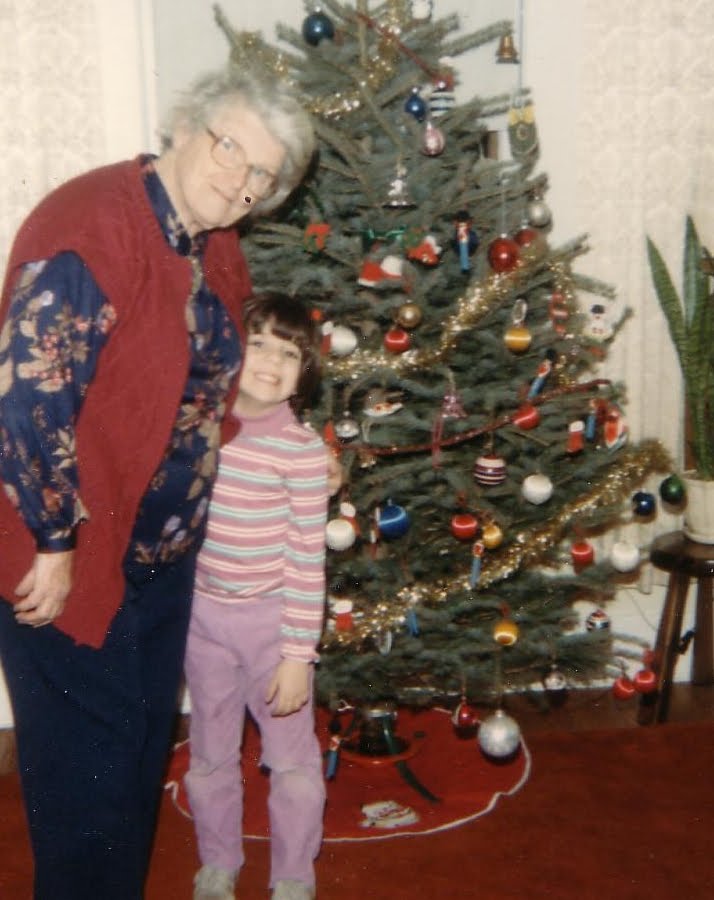
In lieu of a sound clip, I will include a photo of myself and one of my favorite saints.

For a jaded old church nerd like me, it takes something special to move me (for instance, it's rare that the Agnus Dei lights my fire). Certain liturgical elements, thanks to their rarity, catch my attention (I'm a sucker for a good Sequence) and a litany is one of them. This weekend we sang Becker's popular setting of the litany. As we invoked saint after saint, while the newest members of the presbyterate lay prostrate, I became unexpectedly emotional.
The assembly repeated "pray for us" as we called upon saints familiar (Mary & Joseph), arcane (Chrysogonus & Hippolytus) and particular to our Jesuit community (Ignatius & Francis). On other occasions I have sung litanies that put Oscar Romero, Dorothy Day and Pedro Arrupe alongside Linus, Cletus and Clement. Where do we get the confidence to call upon our heroes to petition God on our behalf?
Any Catholic concerned with public perception keeps all this saints hoo-ha quiet if they can. Maybe we hedge a bit, acknowledging that we admire these people, but leaving out the more radical part of our claim to the saints: we believe there is something so generous and holy about them that they will back up our prayers.
As we asked for prayers on Saturday, what really took my breath away was the list we had in front of us, one that only skims the surface of our wealth of heavenly intercessors. And even when we mumble our response, or can't hear the cantor, or let our eyes and minds wander, the saints are still on our side, welcoming us into their communion. What greater advocates can we have than the saints named and unnamed, living in love with God forever?
[Two notes on the litany - I tried to find a recording of the Becker setting to which to link, but I was unable to find one that wasn't either out of tune, goopily sentimental, or one singer overdubbing his own responses to the invocations. Also, after the ordination I said something flippant about not knowing why a piece of music that is mildly cheesy was so moving. Luckily I was with the Jesuits, one of whom had a characteristic reply enumerating all of the evidence for this being the superior setting of the litany. Typical]
In lieu of a sound clip, I will include a photo of myself and one of my favorite saints.
Friday, March 26, 2010
My heart broke loose on the wind
In the 1200s St Dominic preached against the Albigensian heresy.
That’s not the lede I expected to write about my recent trip to the symphony, but all of my reflections on the premiere of Lieberson’s Songs of Love and Sorrow led me back to a lesson I’d taught on Dominic earlier that day. Composed as a companion piece for Lieberson’s Neruda Songs, Songs of Love and Sorrow also sets poetry by Pablo Neruda, this time putting the powerful Chilean poetry in the mouth of a baritone rather than a mezzo-soprano.
As a stereotypical stodgy New Englander, a lot of Neruda’s work feels foreign to me. His expressions of emotion are tactile and earthy, with a lack of inhibition that makes me feel even more uptight in comparison. I’m probably not alone in approaching Neruda (and anything else that challenges me that much) with an overly intellectual detachment, trying to analyze its rich physicality with the sobriety of an over-trained mind. Plena mujer, manzana carnal, luna caliente [Full woman, flesh-apple, hot moon] – for we priggish Americans, it can be easier to hold images like that at arm’s length.
That detachment was impossible last night. Lieberson’s evocative setting energized Neruda’s poetry, but even more revelatory was the very experience of live music.
We are bodies, living in a world we can touch, feel, see, smell, hear. The sonic experience of orchestral forces in a live setting is incomparable, a fact of which I am reminded on every trip to the symphony. The magic of skill and intention forming sound waves that surround us is a perfect example of the blessings of our physical world. Add to that the power of a perfectly calibrated human voice – an example of every part of the human body working together perfectly, art truly incarnate - and you have a recipe for transformation.
Cantas y al sol y a cielo con tu canto/tu voz desgrana el cereal del día,/hablan los pinos con su lengua verde: trinan todas la saves del invierno. [You sing, and your voice peels the husk /of the day’s grain, your song with the sun and the sky,/the pine trees speak with their green tongue:/all the birds of the winter whistle.]
A rich human voice, an orchestra, an emotive musical setting of sensual poetry created the perfect storm, tearing me away from the elite intellectualism honed over many years in the ivory tower. My brain was ripped out and I was only body, heart and blood and guts and skin.
So what does this all have to do with St Dominic? The Albigensians, like many before and after them, professed that the human body and all other matter was evil. Although the Albigensian heresy died out in the decades following Dominic’s preaching, that principle still lives in the hearts and minds of many Christians. We go to church and are scared to open our mouths and sing, never mind move our bodies or touch the person next to us. We believe our faith and our identity are found in what we think rather than how we embody that belief through physical action. Trying to stay on the right side of gluttony we avoid any indulgences, ignoring the many gifts of God that come to us through our sensations. We’re mostly brain, a little heart, and no guts. We’re scared – of sin, of our appetites, of our power.
But to look at the people who truly embrace the physicality of our creation, they don’t slide into gluttony or sin but achieve something truly mystical. Earth’s crammed with heaven/and every common bush afire with God (Elizabeth Barrett Browning). By means of all created things, the divine assails us, penetrates us, and molds us (Pierre Teilhard de Chardin). The king saw his image/in your faces/when he made you mirrors of/all heaven's graces,/a garden of surpassing/sweetness, a fragrance/wafting all graciousness (Hildegard von Bingen).
It’s easy to spend a lot of time with my head in the clouds, hoping for things not seen. But everything in the here and now was created and proclaimed good – including us. What a gift it is to get out of our heads and into our bodies, touching the earth that sustains us, touched by the art that occasionally inflames our senses until our old ways burn up and we become something new in their clean, pure ash.
And I, infinitesimal being,
drunk with the great starry
void,
likeness, image of
mystery,
I felt myself a pure part
of the abyss,
I wheeled with the stars,
my heart broke loose on the wind. - Neruda
That’s not the lede I expected to write about my recent trip to the symphony, but all of my reflections on the premiere of Lieberson’s Songs of Love and Sorrow led me back to a lesson I’d taught on Dominic earlier that day. Composed as a companion piece for Lieberson’s Neruda Songs, Songs of Love and Sorrow also sets poetry by Pablo Neruda, this time putting the powerful Chilean poetry in the mouth of a baritone rather than a mezzo-soprano.
As a stereotypical stodgy New Englander, a lot of Neruda’s work feels foreign to me. His expressions of emotion are tactile and earthy, with a lack of inhibition that makes me feel even more uptight in comparison. I’m probably not alone in approaching Neruda (and anything else that challenges me that much) with an overly intellectual detachment, trying to analyze its rich physicality with the sobriety of an over-trained mind. Plena mujer, manzana carnal, luna caliente [Full woman, flesh-apple, hot moon] – for we priggish Americans, it can be easier to hold images like that at arm’s length.
That detachment was impossible last night. Lieberson’s evocative setting energized Neruda’s poetry, but even more revelatory was the very experience of live music.
We are bodies, living in a world we can touch, feel, see, smell, hear. The sonic experience of orchestral forces in a live setting is incomparable, a fact of which I am reminded on every trip to the symphony. The magic of skill and intention forming sound waves that surround us is a perfect example of the blessings of our physical world. Add to that the power of a perfectly calibrated human voice – an example of every part of the human body working together perfectly, art truly incarnate - and you have a recipe for transformation.
Cantas y al sol y a cielo con tu canto/tu voz desgrana el cereal del día,/hablan los pinos con su lengua verde: trinan todas la saves del invierno. [You sing, and your voice peels the husk /of the day’s grain, your song with the sun and the sky,/the pine trees speak with their green tongue:/all the birds of the winter whistle.]
A rich human voice, an orchestra, an emotive musical setting of sensual poetry created the perfect storm, tearing me away from the elite intellectualism honed over many years in the ivory tower. My brain was ripped out and I was only body, heart and blood and guts and skin.
So what does this all have to do with St Dominic? The Albigensians, like many before and after them, professed that the human body and all other matter was evil. Although the Albigensian heresy died out in the decades following Dominic’s preaching, that principle still lives in the hearts and minds of many Christians. We go to church and are scared to open our mouths and sing, never mind move our bodies or touch the person next to us. We believe our faith and our identity are found in what we think rather than how we embody that belief through physical action. Trying to stay on the right side of gluttony we avoid any indulgences, ignoring the many gifts of God that come to us through our sensations. We’re mostly brain, a little heart, and no guts. We’re scared – of sin, of our appetites, of our power.
But to look at the people who truly embrace the physicality of our creation, they don’t slide into gluttony or sin but achieve something truly mystical. Earth’s crammed with heaven/and every common bush afire with God (Elizabeth Barrett Browning). By means of all created things, the divine assails us, penetrates us, and molds us (Pierre Teilhard de Chardin). The king saw his image/in your faces/when he made you mirrors of/all heaven's graces,/a garden of surpassing/sweetness, a fragrance/wafting all graciousness (Hildegard von Bingen).
It’s easy to spend a lot of time with my head in the clouds, hoping for things not seen. But everything in the here and now was created and proclaimed good – including us. What a gift it is to get out of our heads and into our bodies, touching the earth that sustains us, touched by the art that occasionally inflames our senses until our old ways burn up and we become something new in their clean, pure ash.
And I, infinitesimal being,
drunk with the great starry
void,
likeness, image of
mystery,
I felt myself a pure part
of the abyss,
I wheeled with the stars,
my heart broke loose on the wind. - Neruda
Sunday, November 15, 2009
Seasons
A few years ago I spent three weeks in Malibu at the beginning of the summer. I returned refreshed to a Boston that had suffered a brutal heat wave in my absence, and was often asked how the weather was. Although I'd never needed a hat or gloves, and I'd never sweat through my clothes, I hadn't been totally satisfied with three weeks of 70 degrees and sunny. I didn't have the nerve to confess this to my friends and family, but I had found that monotonously idyllic weather boring.
Years are funny things. They're long enough that we can't really comprehend their span, but short enough that they can seem to pass quickly, and we give a lot of meaning to this number of 365 days. In New England we get a little of everything in each turn of the earth around the sun - snow & freezing temperatures, humidity and blazing heat. Although the warm weather seems terribly distant each February, we never really go long enough without a particular season to forget what it is all about.
I think that's why I have always liked the liturgical calendar so much. Every element of Christian living is given it's due at least once a year. No matter what the seasons of our lives are we are called to ponder the whole experience during the course of the year. We celebrate new life and the Resurrection even if our own lives feel like an unrelenting penitential season. When life is joyful we still pause for sorrowful remembrance and contrition. We go through it all - and then we cycle around and go through it all again.
This weekend I finally packed up my swimming and biking gear from triathlon training this summer. I went into fall with good intentions for keeping up with those sports, but the demands of work and music have left me no time to even find a gym with a pool, never mind swim in that pool once I've found it. I keep saying "I miss swimming", and I do miss the feel of the water on my body and the rhythm of my arms stroking through the water. But what I really miss is the season: bright mornings leading into days that would be longer than the nights, early breakfasts in my friends' kitchen, running my towel through the dryer in the sunny laundry room before I stuffed it into a backpack and got back on my bike.
Years are funny things. They're long enough that we can't really comprehend their span, but short enough that they can seem to pass quickly, and we give a lot of meaning to this number of 365 days. In New England we get a little of everything in each turn of the earth around the sun - snow & freezing temperatures, humidity and blazing heat. Although the warm weather seems terribly distant each February, we never really go long enough without a particular season to forget what it is all about.
I think that's why I have always liked the liturgical calendar so much. Every element of Christian living is given it's due at least once a year. No matter what the seasons of our lives are we are called to ponder the whole experience during the course of the year. We celebrate new life and the Resurrection even if our own lives feel like an unrelenting penitential season. When life is joyful we still pause for sorrowful remembrance and contrition. We go through it all - and then we cycle around and go through it all again.
This weekend I finally packed up my swimming and biking gear from triathlon training this summer. I went into fall with good intentions for keeping up with those sports, but the demands of work and music have left me no time to even find a gym with a pool, never mind swim in that pool once I've found it. I keep saying "I miss swimming", and I do miss the feel of the water on my body and the rhythm of my arms stroking through the water. But what I really miss is the season: bright mornings leading into days that would be longer than the nights, early breakfasts in my friends' kitchen, running my towel through the dryer in the sunny laundry room before I stuffed it into a backpack and got back on my bike.
Tuesday, September 1, 2009
Funerals, Media, and God's People
My first inclination was to keep commentary on the Kennedy funeral to a minimum, mostly because it just seems tacky to Monday morning quarterback a Mass of Christian Burial. But I have spent the last few days surrounded by church types who all have an opinion, plus I am under strict orders to post tonight, so I’ll share my thoughts regardless. Between thoughts on the liturgy and reflections on the concepts of the liturgy as expressed by commentators and media, trying to even think about this has been so meta that I could be sick. Maybe writing will help sort it all out.
Obviously I was very interested in what was likely to be the most public display of Catholic ritual in recent memory. As I was running early Saturday morning (I had to squeeze in a long run before the coverage started), I thought to myself “Will people still think that Catholicism is supremely weird after this whole thing is over?”
Let’s start with what I know best: music. Both beautiful and disappointing. First, it was the one thing that the networks couldn’t seem to broadcast right. During the opening song I surfed all over the place trying to find a balance that didn’t include heaping portions of grating tenor. From what I could tell, words to the opening song were printed in the program, as it appeared people were singing along. I think it would have been powerful to hear the sound of the assembly. I also hope that choosing “Holy God We Praise Thy Name” will encourage some other folks to select that for their funeral, rather than schlock like One Bread One Body and Hail Mary: Gentle Woman (both of which I am singing for a funeral tomorrow).
I was horribly disappointed that the ordinary of the mass wasn’t sung. I’ll admit that there are two issues here. One is that modern American Catholicism does not have a suitably dignified mass setting. Observing the family and their familiarity with the liturgy, I know that they would have reflexively sung along with whatever mass parts the organist cued up. But do we really want Mass of Creation as the public face of Catholicism (nothing personal Marty)?
The second issue is the pervasive entertainment model of the liturgy. Assemblies become audiences, song leaders become soloists, and worship aids become programs. The very pieces of the liturgy that we all know inside and out, the words and melodies that pop out of our mouths without our even knowing it (like Mass of Creation – and even One Bread One Body) are the pieces that we are most willing to cut if we feel that things are going to run a little long. As if those four measures of intro on Haugen’s Sanctus are going to make or break a liturgy with three post-communion reflections and a twenty minute homily. The fact that the Song of Commendation wasn’t sung was the final blow to this lover of communal singing.
One idea that motivates me when ministering at funerals is that our liturgy gives us a glimpse of the eternal life that we hope and pray the departed is enjoying. There was beautiful, sublime music at the funeral on Saturday. Still, as hopeful as I am that Susan Graham and Placido Domingo will enter into the beatific vision when the time comes, their’s are not the voices I want next to me in the celestial choir. I want my mother switching octaves as the music demands. I want my brother jokingly singing JamBandforJesus music the way he does over the phone on Sunday nights. I want my father imitating my “howling”. And, for what it’s worth, I want a big honkin’ timpani roll each time we launch back into singing Holy Holy Holy. The funerals that give me the most hope are ones that are filled with the sound of the voices of God’s people.
A few comments on the media coverage, which I thought was respectful overall. It was perfect to keep the video cameras away from the communion procession; nothing has irked me more in the last few years than the politicization of the Eucharist. Brian Williams’ random editorializing during the Sign of Peace about its recent introduction into liturgical practice was somewhat amusing. Hearing Andrea Mitchell refer to the pall as the ‘fabric’ made my heart sink a little. If you insist on commentary on a religious event, it would be nice to have people who knew their stuff doing the commenting.
But in the end, this wasn’t just a religious event, and it was never going to be. A lot of newspapers sanitized the religious side of things, talking about the nice speakers and the beautiful “performances”. Still, there are some of us out there who are in on the secret, who know what the funeral Mass is about and know how noteworthy and admirable it is that a public person and his public family wanted this Catholic service. We are the ones who got a subversive rush when Cardinal Seán recited the Latin prayers before the censing of the casket. Religion is a piece of identity, and many of us who shared a religious identity with the Senator likely hoped to see even more of that identity shown off for all to see. I bet I’m not the only person who asked “Will people still think that Catholicism is supremely weird after this whole thing is over?” and then thought “I hope so”.
Obviously I was very interested in what was likely to be the most public display of Catholic ritual in recent memory. As I was running early Saturday morning (I had to squeeze in a long run before the coverage started), I thought to myself “Will people still think that Catholicism is supremely weird after this whole thing is over?”
Let’s start with what I know best: music. Both beautiful and disappointing. First, it was the one thing that the networks couldn’t seem to broadcast right. During the opening song I surfed all over the place trying to find a balance that didn’t include heaping portions of grating tenor. From what I could tell, words to the opening song were printed in the program, as it appeared people were singing along. I think it would have been powerful to hear the sound of the assembly. I also hope that choosing “Holy God We Praise Thy Name” will encourage some other folks to select that for their funeral, rather than schlock like One Bread One Body and Hail Mary: Gentle Woman (both of which I am singing for a funeral tomorrow).
I was horribly disappointed that the ordinary of the mass wasn’t sung. I’ll admit that there are two issues here. One is that modern American Catholicism does not have a suitably dignified mass setting. Observing the family and their familiarity with the liturgy, I know that they would have reflexively sung along with whatever mass parts the organist cued up. But do we really want Mass of Creation as the public face of Catholicism (nothing personal Marty)?
The second issue is the pervasive entertainment model of the liturgy. Assemblies become audiences, song leaders become soloists, and worship aids become programs. The very pieces of the liturgy that we all know inside and out, the words and melodies that pop out of our mouths without our even knowing it (like Mass of Creation – and even One Bread One Body) are the pieces that we are most willing to cut if we feel that things are going to run a little long. As if those four measures of intro on Haugen’s Sanctus are going to make or break a liturgy with three post-communion reflections and a twenty minute homily. The fact that the Song of Commendation wasn’t sung was the final blow to this lover of communal singing.
One idea that motivates me when ministering at funerals is that our liturgy gives us a glimpse of the eternal life that we hope and pray the departed is enjoying. There was beautiful, sublime music at the funeral on Saturday. Still, as hopeful as I am that Susan Graham and Placido Domingo will enter into the beatific vision when the time comes, their’s are not the voices I want next to me in the celestial choir. I want my mother switching octaves as the music demands. I want my brother jokingly singing JamBandforJesus music the way he does over the phone on Sunday nights. I want my father imitating my “howling”. And, for what it’s worth, I want a big honkin’ timpani roll each time we launch back into singing Holy Holy Holy. The funerals that give me the most hope are ones that are filled with the sound of the voices of God’s people.
A few comments on the media coverage, which I thought was respectful overall. It was perfect to keep the video cameras away from the communion procession; nothing has irked me more in the last few years than the politicization of the Eucharist. Brian Williams’ random editorializing during the Sign of Peace about its recent introduction into liturgical practice was somewhat amusing. Hearing Andrea Mitchell refer to the pall as the ‘fabric’ made my heart sink a little. If you insist on commentary on a religious event, it would be nice to have people who knew their stuff doing the commenting.
But in the end, this wasn’t just a religious event, and it was never going to be. A lot of newspapers sanitized the religious side of things, talking about the nice speakers and the beautiful “performances”. Still, there are some of us out there who are in on the secret, who know what the funeral Mass is about and know how noteworthy and admirable it is that a public person and his public family wanted this Catholic service. We are the ones who got a subversive rush when Cardinal Seán recited the Latin prayers before the censing of the casket. Religion is a piece of identity, and many of us who shared a religious identity with the Senator likely hoped to see even more of that identity shown off for all to see. I bet I’m not the only person who asked “Will people still think that Catholicism is supremely weird after this whole thing is over?” and then thought “I hope so”.
Monday, May 18, 2009
NPR lets me down
In some of the circles I frequent one’s cultural literacy is indicated by the fervor with which they support National Public Radio. For years I told people I liked it when I really didn’t. Then I owned to not really liking it, and around the same time I started to enjoy listening to it. I really became a fan when the economy took a bad turn. I was out most evenings at BC this year, so my winter commute back to Southie usually involved some commentary on the economy and the soothing tones of the NPR hosts.
Today I ran an errand mid-day and my radio was tuned to NPR. There was an hour long interview with Ryan Murphy, who created Nip/Tuck and who is currently debuting Glee, the new Fox show about a high school choir. The host of Fresh Air, Terry Gross, made this comment at the outset: “I had never heard of such a thing as a show choir. I assume this wasn’t just made up for your show”.
Oooh, that might be the blog post I have been searching for this week, I thought initially. Something pithy about how you haven’t lived if you don’t know what show choir is, and that would be the end of it. But later in the hour, after a few stops in stores, I started the car up again to hear the Terry Gross riffing on religion. That’s when things got interesting.
She brought it up because Murphy is gay. Her first question was about how his parents had dealt with him coming out since they were “religious” – there was no mention of creed or denomination, just the vague moniker of "religious" that seemed in context to be synonymous with homophobic. It was Murphy who brought up that his family was Catholic and that he had gone to Catholic school. “How did you endure Catholic school?” was the next question.
As the conversation progressed, Murphy explained that when he was younger he wanted to be Pope and had been told by his mother that the way someone became Pope was by not sinning at all during the day. So every day 6-year old Murphy would get up and pray that he wouldn’t sin at all that day. To me, that is charming evidence of the desire to do good. To the host this afternoon, it was the funniest thing she had ever heard.
She really wouldn’t let up on the Pope thing, and Murphy went on about how he had been fascinated by the lives of the Saints, and that part of his motivation was that he thought it would be ‘cool’ to choose who gets to be a saint. The interviewer still couldn’t believe that he had wanted to be Pope; she was amused when he admitted to having ‘practiced’ with a fake crozier – all I could think of were the dozens of friends I have who admit to having ‘played’ priest, or ‘played’ mass when they were growing up.
Murphy spoke really eloquently about how his Catholic upbringing had impacted his art. He gave the most credit to the ‘storytelling and theatricality’ (his words) of Catholic liturgy and sacramentals. It seems that his religious background is life-giving to him, and some follow-up questions on that would have made this into the interview that I wanted to hear. Instead Gross hammered home this idea that a Catholic upbringing must have been damaging to him, and she was operating under the assumption that he was now anti-Catholic.
One of the final questions was “How have you dealt with the fact that you are now essentially persona non grata in the Catholic church?” Luckily I restrained myself from screaming at the radio so that I could hear his answer, in which he refuted the premise of her question much better than my irked tirade would have. He said, in short “I still go to Catholic Church, and there are other gay people there, and everyone is warm and welcoming”. Amen, brother.
Today I ran an errand mid-day and my radio was tuned to NPR. There was an hour long interview with Ryan Murphy, who created Nip/Tuck and who is currently debuting Glee, the new Fox show about a high school choir. The host of Fresh Air, Terry Gross, made this comment at the outset: “I had never heard of such a thing as a show choir. I assume this wasn’t just made up for your show”.
Oooh, that might be the blog post I have been searching for this week, I thought initially. Something pithy about how you haven’t lived if you don’t know what show choir is, and that would be the end of it. But later in the hour, after a few stops in stores, I started the car up again to hear the Terry Gross riffing on religion. That’s when things got interesting.
She brought it up because Murphy is gay. Her first question was about how his parents had dealt with him coming out since they were “religious” – there was no mention of creed or denomination, just the vague moniker of "religious" that seemed in context to be synonymous with homophobic. It was Murphy who brought up that his family was Catholic and that he had gone to Catholic school. “How did you endure Catholic school?” was the next question.
As the conversation progressed, Murphy explained that when he was younger he wanted to be Pope and had been told by his mother that the way someone became Pope was by not sinning at all during the day. So every day 6-year old Murphy would get up and pray that he wouldn’t sin at all that day. To me, that is charming evidence of the desire to do good. To the host this afternoon, it was the funniest thing she had ever heard.
She really wouldn’t let up on the Pope thing, and Murphy went on about how he had been fascinated by the lives of the Saints, and that part of his motivation was that he thought it would be ‘cool’ to choose who gets to be a saint. The interviewer still couldn’t believe that he had wanted to be Pope; she was amused when he admitted to having ‘practiced’ with a fake crozier – all I could think of were the dozens of friends I have who admit to having ‘played’ priest, or ‘played’ mass when they were growing up.
Murphy spoke really eloquently about how his Catholic upbringing had impacted his art. He gave the most credit to the ‘storytelling and theatricality’ (his words) of Catholic liturgy and sacramentals. It seems that his religious background is life-giving to him, and some follow-up questions on that would have made this into the interview that I wanted to hear. Instead Gross hammered home this idea that a Catholic upbringing must have been damaging to him, and she was operating under the assumption that he was now anti-Catholic.
One of the final questions was “How have you dealt with the fact that you are now essentially persona non grata in the Catholic church?” Luckily I restrained myself from screaming at the radio so that I could hear his answer, in which he refuted the premise of her question much better than my irked tirade would have. He said, in short “I still go to Catholic Church, and there are other gay people there, and everyone is warm and welcoming”. Amen, brother.
Sunday, May 10, 2009
On being where I'm meant to be, and finding God in the woods.
Those students who use this blog as a procrastination technique had a disappointing week this week, as I didn’t post during finals when procrastination is needed the most. The reason I didn’t write much is simple busy-ness. I was in a great production at Boston College featuring alumni who work in the arts and current students. We had an open dress for students who wanted to come on Friday night, and then last night was the ticketed benefit. As I was standing back stage waiting to make my entrance while the students sang and the band played, I got goosebumps as I realized that I was doing exactly what I wanted to do and that I was exactly where I wanted to be. I have worked so hard to improve as a performer, and I am so lucky not only to have opportunities to perform, but to have the perspective to appreciate my opportunities.
On a slightly different note, tonight was the last mass out at BC with my darling choir. I remember when I was growing up it was very cool to say “I don’t believe I need to go to Church, I just like to go out to the woods to pray”. I was pretty skeptical that those people ever actually went out in the woods, but I think I also was starting to have an inkling that faith is not just about us and God, but about us and us. I knew that I found God my family, but that was so normal that it almost seemed like cheating, and I didn’t feel like I could make the argument that you need others to encounter God without some stronger evidence.
I no longer have much of an interest in making any arguments, but I have a little more evidence toward my initial thesis. Worshipping with the community at Boston College brings me closer to God. I have people there who know me, and I see the students there live their faith every day in a way that educates me. They walk the walk when we leave liturgy, and in my limited time that I am on campus I am able to see that. We come together in love every week, and I believe more strongly in God’s grace because I hear their testimony to it.
It’s hard to find that these days, especially for Catholics. Parishes are not always the neighborhood centers they used to be, and it is easy for us to gather for worship not as a new Body but as collection of isolated islands, still bearing our burdens alone. On the occasions that I imagine what it was like for the early church (I probably do that more than most people, but still not so often that it’s too weird), I visualize personalities coming together. It’s not that these people decided to start a Church because they were all best friends, but because the power of their experience of Christ bound them to each other. Their shared experience made the challenges of being together and loving each other worth bearing. Their community was not about being happy or liking each other, not about power or eloquence (or even music) but about fellowship in the Risen Christ.
The point of this rambling? I experience God’s grace through the community to whom I purportedly minister. I am fortunate and I am grateful.
On a slightly different note, tonight was the last mass out at BC with my darling choir. I remember when I was growing up it was very cool to say “I don’t believe I need to go to Church, I just like to go out to the woods to pray”. I was pretty skeptical that those people ever actually went out in the woods, but I think I also was starting to have an inkling that faith is not just about us and God, but about us and us. I knew that I found God my family, but that was so normal that it almost seemed like cheating, and I didn’t feel like I could make the argument that you need others to encounter God without some stronger evidence.
I no longer have much of an interest in making any arguments, but I have a little more evidence toward my initial thesis. Worshipping with the community at Boston College brings me closer to God. I have people there who know me, and I see the students there live their faith every day in a way that educates me. They walk the walk when we leave liturgy, and in my limited time that I am on campus I am able to see that. We come together in love every week, and I believe more strongly in God’s grace because I hear their testimony to it.
It’s hard to find that these days, especially for Catholics. Parishes are not always the neighborhood centers they used to be, and it is easy for us to gather for worship not as a new Body but as collection of isolated islands, still bearing our burdens alone. On the occasions that I imagine what it was like for the early church (I probably do that more than most people, but still not so often that it’s too weird), I visualize personalities coming together. It’s not that these people decided to start a Church because they were all best friends, but because the power of their experience of Christ bound them to each other. Their shared experience made the challenges of being together and loving each other worth bearing. Their community was not about being happy or liking each other, not about power or eloquence (or even music) but about fellowship in the Risen Christ.
The point of this rambling? I experience God’s grace through the community to whom I purportedly minister. I am fortunate and I am grateful.
Monday, March 9, 2009
Which is weirder?
A. That upon hearing the sound of old-style footage coming from my office-mates computer, I asked "Are you watching footage of the Papal Coronation of Pope John XXIII?"
OR
B. That the answer was yes?
OR
B. That the answer was yes?
Thursday, February 12, 2009
Opera and Catholicism (my two favorite things!)
We interrupt the NOLA recap for two important announcements.
1. Alcina opens tonight. Go see it.

2. This news item raised my blood pressure before 7 am:
Catholic symbols stir diverse feelings at BC
First, I doubt that the reactions were as varied as the media wants them to be. BC is a Catholic school, and most people get that. I'm always amazed at how people can miss the forest for the trees on things like this. The school's Catholic identity is part of the mission statement, and people are getting their knickers in a bunch over crucifixes? If a professor really thinks that Catholicism is so contrary to the spirit of intellectual inquiry, why did they agree to do their intellectual inquiry at Boston College in the first place?
As a Catholic I have often found that people want to call me out on things like the Crusades and Galileo. And we're the narrow ones? The time that Catholicism spent in the fortress is unfortunate indeed, but it doesn't tell the whole story. The idea that Catholicism is incompatible with scholarship has been steadily disproven throughout the ages. I'd like to put some of these disgruntled professors in a room with Alcuin, Jerome, Thomas Aquinas, and the director of the Vatican Observatory and see who the serious scholars are then.
I will admit, that ugly new Ignatius statue outside Higgins? That is offensive.
Edited to add this quote from a friend: And when a mosaic of Dorothy Day is a problem for you, you don't know what's going on.
1. Alcina opens tonight. Go see it.

2. This news item raised my blood pressure before 7 am:
Catholic symbols stir diverse feelings at BC
First, I doubt that the reactions were as varied as the media wants them to be. BC is a Catholic school, and most people get that. I'm always amazed at how people can miss the forest for the trees on things like this. The school's Catholic identity is part of the mission statement, and people are getting their knickers in a bunch over crucifixes? If a professor really thinks that Catholicism is so contrary to the spirit of intellectual inquiry, why did they agree to do their intellectual inquiry at Boston College in the first place?
As a Catholic I have often found that people want to call me out on things like the Crusades and Galileo. And we're the narrow ones? The time that Catholicism spent in the fortress is unfortunate indeed, but it doesn't tell the whole story. The idea that Catholicism is incompatible with scholarship has been steadily disproven throughout the ages. I'd like to put some of these disgruntled professors in a room with Alcuin, Jerome, Thomas Aquinas, and the director of the Vatican Observatory and see who the serious scholars are then.
I will admit, that ugly new Ignatius statue outside Higgins? That is offensive.
Edited to add this quote from a friend: And when a mosaic of Dorothy Day is a problem for you, you don't know what's going on.
Tuesday, February 10, 2009
NOLA Day 1: 2/5/09 – The Flight
I sprinted from work to the airport on Thursday afternoon to meet up with everyone for the flight to New Orleans. We were flying through Houston on Continental (which, to be perfectly honest, I wasn’t sure still existed). The longer leg of the flight was uneventful, but jetting from Houston to New Orleans things became more interesting.
One of the flight attendants asked where we were from and what we were doing down there. I made the comment that some people seemed surprised that there were a bunch of college kids who were going to New Orleans to volunteer rather than to party, and she replied “oh believe me, I know!” A few minutes later she returned to talk to her new do-gooder friends and saw that one of our party was reading from a Bible.
“You’re a Catholic group and you are reading from the Bible? I thought they taught you not to read the Bible.” Oh boy, I thought, as I caught snippets of the conversation from the row behind me. I was too far away to jump in and bail anybody out, but close enough to hear the whole evangelical disaster unfold. “Why do you worship Mary?” she went on to ask. This flight attendant came back with tracts from her church a few times, the last of which was explicitly anti-Catholic and was entitled “Rome vs. the Bible”.
I find that behavior annoying at any time, and I find evangelizing particularly annoying when a person knows that their target is already part of a religious tradition. These tracts compared quotes from the Catechism with quotes from the Bible, a perfect example of the erroneous assumption that Catholics are “Catechism-thumpers” the same way that other groups are “Bible-thumpers”. Catholic theology is all about context. Picking one line out of the 1992 Catechism and ignoring the nearly two millennia of theology that came before it misses the message.
But that’s another homily for another day. It’s enough to mention that airline staff should not be criticizing our religion when we are held captive at 30,000 feet. Another of the attendants was also aggressive, pretending to put my theology textbook in the trash and then demanding to know my age when I told him that the book was “wicked expensive”.
Perhaps most disturbing of the trip was reading an issue of Cosmopolitan that was borrowed from a student. Most magazines are designed to make women crazy – we should gain enough confidence to enjoy the magazine, but enough insecurity to buy another one next month. I can live with that, most of the time, but this issue of Cosmo really took the cake. I knew going into it that Cosmo is filthy, so that wasn’t much of a shock. What perturbed me was that in this issue there was also a long article about all of the different ways women have been killed or hurt while traveling. You can’t on one page encourage young women to get naked and make themselves physically vulnerable to strangers whenever they want and on the next page advocate against driving at night.
I told all of the young women on the trip they weren’t allowed to read that magazine, but I’m not sure they followed my decree. We touched down in New Orleans, rented a few vans, and arrived at Corpus Christi Parish around 11:30.
Next installment…our service day.
One of the flight attendants asked where we were from and what we were doing down there. I made the comment that some people seemed surprised that there were a bunch of college kids who were going to New Orleans to volunteer rather than to party, and she replied “oh believe me, I know!” A few minutes later she returned to talk to her new do-gooder friends and saw that one of our party was reading from a Bible.
“You’re a Catholic group and you are reading from the Bible? I thought they taught you not to read the Bible.” Oh boy, I thought, as I caught snippets of the conversation from the row behind me. I was too far away to jump in and bail anybody out, but close enough to hear the whole evangelical disaster unfold. “Why do you worship Mary?” she went on to ask. This flight attendant came back with tracts from her church a few times, the last of which was explicitly anti-Catholic and was entitled “Rome vs. the Bible”.
I find that behavior annoying at any time, and I find evangelizing particularly annoying when a person knows that their target is already part of a religious tradition. These tracts compared quotes from the Catechism with quotes from the Bible, a perfect example of the erroneous assumption that Catholics are “Catechism-thumpers” the same way that other groups are “Bible-thumpers”. Catholic theology is all about context. Picking one line out of the 1992 Catechism and ignoring the nearly two millennia of theology that came before it misses the message.
But that’s another homily for another day. It’s enough to mention that airline staff should not be criticizing our religion when we are held captive at 30,000 feet. Another of the attendants was also aggressive, pretending to put my theology textbook in the trash and then demanding to know my age when I told him that the book was “wicked expensive”.
Perhaps most disturbing of the trip was reading an issue of Cosmopolitan that was borrowed from a student. Most magazines are designed to make women crazy – we should gain enough confidence to enjoy the magazine, but enough insecurity to buy another one next month. I can live with that, most of the time, but this issue of Cosmo really took the cake. I knew going into it that Cosmo is filthy, so that wasn’t much of a shock. What perturbed me was that in this issue there was also a long article about all of the different ways women have been killed or hurt while traveling. You can’t on one page encourage young women to get naked and make themselves physically vulnerable to strangers whenever they want and on the next page advocate against driving at night.
I told all of the young women on the trip they weren’t allowed to read that magazine, but I’m not sure they followed my decree. We touched down in New Orleans, rented a few vans, and arrived at Corpus Christi Parish around 11:30.
Next installment…our service day.
Wednesday, November 5, 2008
From USCCB.org
Bishops Congratulate Barack Obama on Historic Election;Urge Him to Defend the Weak, Heal Divisions
WASHINGTON—The U.S. bishops congratulated President-elect Barack Obama, the first African-American elected President of the United States, and called the event "historic" and coming at a difficult time.
"Our country is confronting many uncertainties," the bishops said. "We pray that you will use the powers of your office to meet them with a special concern to defend the most vulnerable among us and heal the divisions in our country and our world. We stand ready to work with you in defense and support of the life and dignity of every human person."
They bishops offered their remarks in a November 4 letter to President-elect Obama from Cardinal Francis George of Chicago, president of the United States Conference of Catholic Bishops.The letter follows.
Dear President-elect Obama,
I write to you, in my capacity as President of the United States Conference of Catholic Bishops, to express our congratulations on your historic election as President of the United States. The people of our country have entrusted you with a great responsibility. As Catholic Bishops, we offer our prayers that God give you strength and wisdom to meet the coming challenges.
Our country is confronting many uncertainties. We pray that you will use the powers of your office to meet them with a special concern to defend the most vulnerable among us and heal the divisions in our country and our world. We stand ready to work with you in defense and support of the life and dignity of every human person.
May God bless you and Vice President-elect Biden as you prepare to assume your duties in service to our country and its citizens.
Sincerely yours,
Francis Cardinal George,
OMI
Archbishop of Chicago
President
WASHINGTON—The U.S. bishops congratulated President-elect Barack Obama, the first African-American elected President of the United States, and called the event "historic" and coming at a difficult time.
"Our country is confronting many uncertainties," the bishops said. "We pray that you will use the powers of your office to meet them with a special concern to defend the most vulnerable among us and heal the divisions in our country and our world. We stand ready to work with you in defense and support of the life and dignity of every human person."
They bishops offered their remarks in a November 4 letter to President-elect Obama from Cardinal Francis George of Chicago, president of the United States Conference of Catholic Bishops.The letter follows.
Dear President-elect Obama,
I write to you, in my capacity as President of the United States Conference of Catholic Bishops, to express our congratulations on your historic election as President of the United States. The people of our country have entrusted you with a great responsibility. As Catholic Bishops, we offer our prayers that God give you strength and wisdom to meet the coming challenges.
Our country is confronting many uncertainties. We pray that you will use the powers of your office to meet them with a special concern to defend the most vulnerable among us and heal the divisions in our country and our world. We stand ready to work with you in defense and support of the life and dignity of every human person.
May God bless you and Vice President-elect Biden as you prepare to assume your duties in service to our country and its citizens.
Sincerely yours,
Francis Cardinal George,
OMI
Archbishop of Chicago
President
Friday, October 24, 2008
on guilt
Yesterday I paid for a $5 drink with a $10 bill. The bartender gave me back $15 in change. So I gave the ten back.
I have been thinking recently about 'guilt', particularly of the "Catholic guilt" variety. I generally am annoyed when people make jokes about "Catholic guilt", because overall I don't find guilt to be a terrible thing. It tells us when we have done something wrong. It ensures altruistic behavior. I think people often imagine Catholic guilt as just enough guilt to feel bad about having done something, but not enough to not do it in the first place. Still, for most people I know, guilt (or the prospect of it) is what keeps us on the straight and narrow, doing the right thing for the people around us.
I will admit, sometimes I can take the idea a little too far. I had a professor once who said "I hope this generation has guilt about justice the way my generation had guilt about sex", and I fall prey to extensive scrupulosity when issues of finances and divvying up of resources come up. In short: I feel guilty about having too much.
Many of you know the saga of the cellphone. Broken, then replaced, then I was given a hand-me-down, then charger stolen, etc. Yesterday the gift-phone started acting up, and my first thought was "this is what I deserve for using a phone that I didn't pay for". That is quite obviously hogwash, but I know for sure that if I had kept that $10 last night I would now be blaming any number of mishaps on some post-modern amalgam of karma and divine punishment (neither of which I believe in - consciously).
A few weeks ago I went to a wedding and shared a room with two female friends. They went up to bed about an hour before I did, so they decided to share one of the full-sized beds so that I wouldn't wake either up them up when I came up. This meant, of course, that I had the other bed to myself. When I woke up in the morning I still had slept as if I were sharing the bed, crammed all the way over to one side with the other side barely disturbed. That is the essence of Catholic guilt, at least for me: Feeling so wrong about having more than my share that I won't indulge in all of it, even though no one else benefits from my sacrifice and I did nothing wrong.
I have been thinking recently about 'guilt', particularly of the "Catholic guilt" variety. I generally am annoyed when people make jokes about "Catholic guilt", because overall I don't find guilt to be a terrible thing. It tells us when we have done something wrong. It ensures altruistic behavior. I think people often imagine Catholic guilt as just enough guilt to feel bad about having done something, but not enough to not do it in the first place. Still, for most people I know, guilt (or the prospect of it) is what keeps us on the straight and narrow, doing the right thing for the people around us.
I will admit, sometimes I can take the idea a little too far. I had a professor once who said "I hope this generation has guilt about justice the way my generation had guilt about sex", and I fall prey to extensive scrupulosity when issues of finances and divvying up of resources come up. In short: I feel guilty about having too much.
Many of you know the saga of the cellphone. Broken, then replaced, then I was given a hand-me-down, then charger stolen, etc. Yesterday the gift-phone started acting up, and my first thought was "this is what I deserve for using a phone that I didn't pay for". That is quite obviously hogwash, but I know for sure that if I had kept that $10 last night I would now be blaming any number of mishaps on some post-modern amalgam of karma and divine punishment (neither of which I believe in - consciously).
A few weeks ago I went to a wedding and shared a room with two female friends. They went up to bed about an hour before I did, so they decided to share one of the full-sized beds so that I wouldn't wake either up them up when I came up. This meant, of course, that I had the other bed to myself. When I woke up in the morning I still had slept as if I were sharing the bed, crammed all the way over to one side with the other side barely disturbed. That is the essence of Catholic guilt, at least for me: Feeling so wrong about having more than my share that I won't indulge in all of it, even though no one else benefits from my sacrifice and I did nothing wrong.
Subscribe to:
Posts (Atom)